What does a takeoff specialist do?
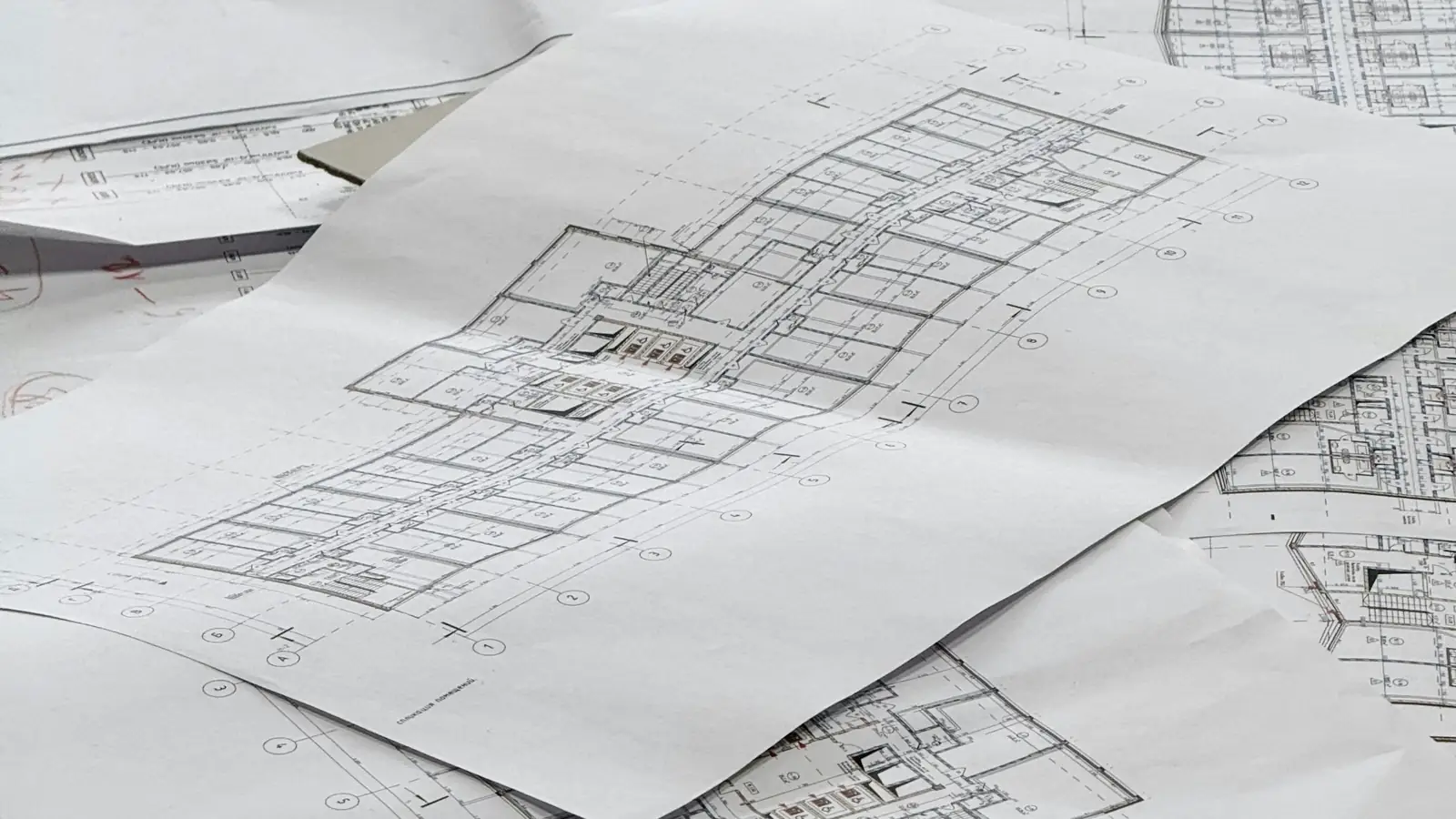
A takeoff specialist reads drawings and specifications and measures them into quantities: linear feet of pipe, square footage of drywall, cubic yards of concrete. The takeoff specialist records the unit, the measurement rule and the source sheet on each line so an estimator can price it and a reviewer can audit it.
What Is a Takeoff Specialist? Definition and Core Role
A takeoff specialist converts drawings and specifications into measured quantities, with the unit, the measurement rule, and the source sheet recorded next to every number. The output is not a price; it is a takeoff sheet that states, for example, 148 cubic yards of footing concrete under Division 03 Concrete, measured from grid A–F on sheet S-201 at the plan scale. That record is what separates a defensible takeoff from a pile of numbers nobody can audit.
The role is narrower than most job postings suggest. It owns plan reading, scale verification, quantity extraction, and unit consistency across all 50 CSI MasterFormat divisions in the bid package. The person in this seat does not set labor rates, apply markup, or choose the AACE estimate class; those decisions belong to the cost estimator who receives the sheet. The division of labor matters because a 4% measurement error and a 4% pricing error get fixed in different places by different people.
Good takeoffs are boring in the right way. Each line carries the sheet reference, the scale used, the waste factor applied, and the arithmetic shown so a reviewer can re-multiply it in seconds. When a plan revision lands, the specialist re-measures only the affected scope and logs what changed, which keeps the addendum trail intact for bid leveling.
| Task | Takeoff Specialist | Cost Estimator |
|---|---|---|
| Read drawings and specifications | Owns | Reviews |
| Select measurement rule and unit | Owns | Confirms |
| Extract quantities by CSI division | Owns | Reviews |
| Apply waste factor | Owns, with stated basis | Approves |
| Assign unit price and labor hours | Does not do | Owns |
| Set AACE estimate class | Does not do | Owns |
| Issue RFI on unclear scope | Raises | Reviews and sends |
Takeoff Specialist vs. Estimator: Where the Job Ends
The specialist's deliverable ends at quantity and unit; the estimator's begins at unit price, labor hours, and productivity rate. Put another way, the specialist proves that 1,240 linear feet of 8-inch CMU wall exists on the drawings, and the estimator decides what that wall costs to build in a given market. Mixing the two roles in one person is common on small teams, but the handoff should still be a written sheet, not a verbal summary. Our measured quantity extraction team keeps that boundary explicit so pricing starts from an auditable base.
Why Traceable Quantities Matter More Than Speed
A takeoff delivered quickly but without measurement rules cannot be defended in a scope dispute or a change order negotiation. Traceability means a reviewer can open sheet A-101, set the same scale, and reproduce the same square footage without calling anyone. That is also why our drawing-based takeoff work publishes the rule beside the quantity on every line.
What Does a Takeoff Specialist Do Day to Day?
Ask what this role does on a Tuesday and the honest answer is: read, measure, tag, and check. The day starts with plan reading across the architectural, structural, mechanical, and electrical sets, cross-referenced against the specification sections and the latest addendum. The person doing the work confirms the sheet index is current before measuring anything, because a takeoff on a superseded sheet is wasted labor and a liability at bid time.
Duties and responsibilities then move to measurement. For each scope item the rule is chosen before touching the drawing: area for Division 09 finishes, linear feet for pipe and conduit runs, count for fixtures and doors, volume for Division 03 concrete. The waste factor is applied per material, not globally, and the basis is written on the sheet — typical allowances run higher on cut sheet goods and lower on pre-ordered assemblies. Every quantity carries the sheet number, the scale, and the rule used.
Checking is a scheduled task, not an afterthought. A second pass re-measures a sample of lines, verifies that subtotals roll up correctly, and confirms that units match between the takeoff sheet and the bid package. The day ends with a handoff package: the takeoff sheet, marked-up drawing pages, and a short list of open questions for the estimator to convert into requests for information.
| Task | Unit of Output | Traceability Record |
|---|---|---|
| Plan and addendum review | Sheet index check | Revision log with dates |
| Measurement | Quantity by unit | Sheet number and scale |
| Waste application | Adjusted quantity | Stated waste basis per material |
| Schedule reconciliation | Count of doors, windows, fixtures | Schedule sheet reference |
| Arithmetic check | Verified subtotals | Re-measured sample lines |
| RFI drafting | Open question list | Drawing detail reference |
| Handoff | Takeoff sheet and markups | Package index |
Reading Plans, Specs, and Addenda
Plan reading is a discipline of cross-references. The door schedule, window schedule, and finish schedule each carry quantities that must reconcile with the floor plans, and the specification section governs what is actually furnished. Addenda are logged by date and number, and any scope change is re-measured rather than patched with a percentage guess. Our guide to common takeoff errors in construction covers the reconciliation failures that survive to bid day.
Measuring, Tagging, and Checking Quantities
Each line in the takeoff sheet is tagged with a CSI division, a sheet reference, and a measurement rule so the estimator can sort and price without re-reading the drawings. Cubic yards on concrete, linear feet on conduit, and square footage on drywall all sit on the same sheet with their units visible. A worked walkthrough of a sample takeoff sheet shows how the tagging survives a revision cycle.
Handoff to Estimating and Purchasing
The handoff package is the product. It includes the takeoff sheet, the marked-up drawings, and a variance note where the current revision differs from the previous one. Purchasing uses the same sheet to issue material inquiries, which is why the unit and the waste basis must be stated rather than implied.
What Skills and Tools Does a Takeoff Specialist Need?
The core skill is unit discipline. A takeoff specialist must move between square footage, linear feet, cubic yards, and counts without losing the thread, and must know when a scale ruler reading on a half-size print is unreliable. Measurement rules are chosen and written down before the first click: gross area versus net area for Division 09 finishes, centerline versus outside dimension for footing runs, and bank versus compacted volume for cut and fill. The rule is what makes the number reproducible.
The construction takeoff specialist career path usually starts in field work, drafting, or junior estimating, where plan reading becomes second nature. From there the progression runs through commercial plan sets, then complex structural and MEP packages, then review responsibility for other specialists' sheets. The takeoff specialist vs estimator distinction shows up in that progression: some specialists stay in measurement and become the reviewer of record, while others cross into pricing and take on AACE estimate class decisions.
Software fluency is expected but secondary. On-screen takeoff tools, PDF markup platforms, and spreadsheet workbooks all speed up extraction, yet none of them decide the measurement rule. A specialist who can defend the rule in a spreadsheet will outperform one who clicks quickly in an unfamiliar tool.
Measurement Rules and Unit Discipline
Write the rule on the sheet before measuring. A footing run measured to centerline and one measured to outside face differ by half a footing width per corner, and that difference compounds across a large mat foundation. Division 05 metals work adds its own rules: connection counts, bolt quantities, and shop primer areas are separate lines, not one lump sum. Our walkthrough of material quantity formulas sets out the arithmetic behind each unit.
Software: On-Screen Takeoff, Bluebeam, and Spreadsheets
On-screen takeoff tools handle scale calibration and area measurement; PDF markup platforms handle revision comparison and annotation; spreadsheets handle the roll-up and the audit trail. The comparison between manual and digital takeoff methods is less about speed than about which method leaves a cleaner record for review. A quantity takeoff Excel template with fixed unit columns prevents the most common roll-up error.
Communication With Estimators and PMs
A specialist who writes a clear RFI saves the estimator a day of guessing. State the sheet, the detail, the conflict, and the quantity affected, then propose the assumption used pending an answer. Project managers need the same clarity on revisions: which quantities changed, by how much, and which bid package line they touch. Where a team needs pricing on top of the measured quantities, a single-account estimator service picks up from the takeoff sheet rather than starting over.
How Does a Takeoff Specialist Fit Into the Estimating Team?
The specialist produces the measured quantities; the estimator prices them. On a typical bid, the specialist works from the drawing set and specification sections, records each line on a takeoff sheet with the sheet number, the measurement rule and the unit, and passes the package forward. The estimator then applies unit prices, labor hours and productivity rates, adds general conditions and markup, and assembles the bid package.
The handoff is where traceability is won or lost. A line that reads "concrete slab — 42.0 cubic yards" is not enough; the estimator needs the length, width, thickness and waste assumption behind it. The calculator below returns area, cubic feet, net cubic yards and order quantity from four inputs, so every downstream price can be traced back to the same arithmetic. A 30 ft by 24 ft slab at 6 in thick with 5% waste gives 720 sq ft, 360 cubic feet, 13.33 net cubic yards and an order quantity of 14.00 cubic yards.
Rebar and finishes travel the same route. A rebar schedule supplies bar size, spacing and lap allowances that the specialist converts to linear feet and weight, while Division 09 finishes quantities come from the finish schedule room by room rather than from a floor-area multiplier. Those measured lines are what a cost estimator prices, and what a reviewer can re-check line by line.
Slab quantity takeoff
- Area
- 2,400 sq ft
- Volume
- 800 cu ft
- Net concrete
- 29.63 cu yd
- Order quantity
- 31.11 cu yd
Formula: length × width × (thickness ÷ 12) ÷ 27 = cubic yards. Thickened edges, footings and pump waste are taken off separately.
Handoff to Dedicated Construction Estimator
When a firm keeps pricing in-house, the takeoff package lands on the desk of the estimator who owns a single account's pricing and holds the unit prices and the bid leveling. The package should carry the drawing revision, the addendum log and a note on every assumption, so the estimator never re-measures to find out what a number means. A clean handoff shortens review time because the estimator prices rather than investigates.
When to Use Quantity Takeoff Services
Firms reach for outsourced measurement of drawing quantities when bid volume peaks and internal staff cannot measure every set, or when a scope such as Division 26 electrical needs a specialist's eye on device counts and feeder lengths. Outsourcing the measurement keeps the estimator on pricing and scope review. The deliverable should arrive as an Excel workbook with marked-up drawing pages, not as a single total.
Freelance Construction Estimating Support
Smaller builders often need both measurement and pricing on a single project, which is where freelance construction estimating fits. The same discipline applies: quantities tied to sheets, rules stated, and waste factors written down rather than assumed. Ask for the takeoff sheet alongside the estimate so you can audit any line before you submit the bid.
How Do You Become a Takeoff Specialist?
Most working takeoff specialists arrive from a trade, a drafting desk or a construction management program rather than from a dedicated degree. The common thread is plan reading: you can follow a door schedule, read a specification section and find the dimension you need on an elevation without hunting. On-screen takeoff software is learned in weeks; the judgment behind a waste factor takes longer.
Building a portfolio matters more than a certificate. Three complete takeoffs of real sets, each with marked-up drawings and a summary sheet, prove more to a hiring manager than a course completion. If you want a structured example to copy, the line-by-line walkthrough of a sample takeoff shows the arithmetic behind each entry.
The path from there is usually junior takeoff work into a specialization, such as Division 26 electrical counts or structural steel, and then into estimating. A takeoff specialist salary tends to sit below a cost estimator's because the role stops at quantity, not price. The wage table below shows the BLS national hourly figures for the trades that feed this pipeline, which is the realistic starting benchmark for anyone moving off tools and into an office.
| Occupation | 25th percentile | Median | 75th percentile |
|---|---|---|---|
| Construction laborers | — | $22.66 | — |
| Carpenters | — | $29.12 | — |
| Cement masons and concrete finishers | — | $27.41 | — |
| Electricians | — | $30.38 | — |
| Plumbers, pipefitters and steamfitters | — | $30.67 | — |
| First-line supervisors, construction trades | — | $38.42 | — |
| Cost estimators | — | $37.86 | — |
| Occupation | 25th percentile | Median | 75th percentile |
|---|---|---|---|
| Construction laborers | $18.57 | $22.66 | $28.72 |
| Carpenters | $23.32 | $29.12 | $36.94 |
| Electricians | $23.76 | $30.38 | $40.36 |
| Plumbers, pipefitters and steamfitters | $24.13 | $30.67 | $40.92 |
| Cement masons and concrete finishers | $22.60 | $27.41 | $32.15 |
| First-line supervisors, construction trades | $30.48 | $38.42 | $48.78 |
| Cost estimators | $29.40 | $37.86 | $48.97 |
Base wages before payroll taxes, insurance and benefits. Source: BLS Occupational Employment and Wage Statistics, national, all industries.
Education and Entry Paths
Trade experience gives you material behavior: how much mortar a block wall consumes, why a window schedule rarely matches the plan dimension. Drafting and CAD programs teach sheet organization and revision control. Construction management degrees add estimating and scheduling coursework. Any of the three can lead into the role if you can demonstrate accurate measurement on a real set.
Portfolio and Certification Options
Choose three sets of different building types and take off one CSI division each in depth: Division 03 concrete, Division 05 metals, Division 09 finishes. Include the marked-up sheets and a short note on each rule you applied. Certification in estimating or takeoff software helps at the margin, but a reviewer will still test you with an unfamiliar drawing.
Salary and Career Progression
Pay rises with the divisions you can measure unaided and the speed at which you deliver a bid-ready package. The usual progression runs from junior takeoff to senior takeoff, then to estimator, then to chief estimator or preconstruction manager. Moving into estimating is the largest single step, because the role then carries unit price and markup responsibility.
What Mistakes Do Takeoff Specialists Need to Avoid?
The failures that hurt are the ones that break the audit trail, not the ones that look dramatic. A quantity that cannot be tied to a sheet, a rule and a revision is a liability, because nobody downstream can check it before the bid goes out. Strong construction takeoff specialist skills show up as documentation discipline as much as measurement speed.
A practical defense is a fixed column set on every takeoff sheet: sheet number, revision, description, unit, quantity, waste factor, source rule. When a reviewer questions a line, the answer is in the row. The construction takeoff mistakes write-up covers the downstream cost of getting this wrong.
Treat assumptions as deliverables. If you assume a waste factor, a lap allowance or a deduction threshold, write it on the sheet and in the summary. The cost estimator reviewing the package can then accept or override it deliberately rather than discovering it after the bid is submitted.
Unit and Scale Errors
Mixing linear feet with square footage is the classic error, usually when a wall length is multiplied by height in inches and recorded as feet. Scale errors come from measuring a scanned sheet at the wrong plot size, or from scaling a dimension that is written on the drawing. Always prefer the written dimension and record the scale you used.
Missing Scope and Double-Counting
Addenda and plan revisions change quantities, and a takeoff built on the original set silently misses them. Log every addendum and re-measure the affected sheets. Double-counting usually appears at scope boundaries: a window schedule counted once by opening and again by wall area, or general conditions items carried in two packages.
Undocumented Assumptions
An unstated waste factor is invisible until the order comes up short. The same applies to deductions for openings, lap allowances on rebar and cut and fill assumptions on sitework. Write each one on the takeoff sheet with the rule that produced it, so the estimate can be defended line by line.
Takeoff Specialist FAQ: What Clients and Candidates Ask
The questions below come up in both directions: owners and contractors deciding how to buy takeoff work, and tradespeople deciding whether to move into it. Each answer names the deliverable or measurement you can check, so neither side has to take the answer on faith.
How does a specialist differ from an estimator? The specialist produces measured quantities and a documented takeoff sheet; the estimator applies unit prices, labor hours and productivity rates to turn those quantities into a bid. The handoff is the line where the two roles meet. When the same person does both, ask which column of the sheet is measurement and which is pricing, because mixing them is where markup and waste factor get applied twice. For a pricing role with bid-leveling responsibility, see our option for a single-account estimating resource.
What should a client check before accepting a takeoff? Start with the drawing revision and addendum log: a takeoff measured against a superseded sheet is worthless no matter how clean the arithmetic. Then confirm the measurement rule is stated on the sheet, that every count traces to a schedule (door schedule, window schedule, finish schedule), and that linear feet, square footage and cubic yards each carry their own unit column rather than a single generic quantity. The role's responsibilities include flagging a request for information when a specification section contradicts the plan; a sheet with no RFIs on a complex set usually means nobody read the specs.
Is takeoff work a good career entry point? It is one of the few construction roles where plan reading and arithmetic are the whole job, so a carpenter or electrician can move into it without a degree. The BLS wage data on this page shows cost estimators earning more than the trades on median, which is the gap the career path closes. Candidates should build a portfolio of three takeoffs across different CSI MasterFormat divisions, for example Division 03 concrete, Division 09 finishes and Division 26 electrical, since each demands a different measurement habit.
What does the job involve when the bid package is incomplete? Measure what is shown, state the assumption in writing, and list the missing information as an open item. A quantity built on an assumed wall height is still useful, but only if the assumption appears next to the number. If you would rather hand the whole set to a team that documents those assumptions for you, send your plans and we will quote the fee after reviewing them.
Frequently Asked Questions
What is a takeoff specialist in construction?
A takeoff specialist is a construction professional who measures the drawings and specifications and records quantities in a structured takeoff sheet. The work converts scaled dimensions into linear feet, square footage, cubic yards, counts and weights, each tied to a CSI MasterFormat division and a stated measurement rule. The output feeds the cost estimator; it does not price the work.
What does a takeoff specialist do vs an estimator?
A takeoff specialist produces quantities; a cost estimator converts those quantities into money. The specialist measures Division 03 concrete, Division 05 metals, Division 09 finishes and Division 26 electrical runs, then hands over a takeoff sheet with units and rules. The estimator applies unit prices, labor hours, productivity rates, markups and general conditions, and assigns the AACE estimate class.
How much does a takeoff specialist make?
Pay depends on the market, the candidate's plan-reading depth and whether the role covers one trade or all divisions. The page charts show current U.S. Bureau of Labor Statistics wage data for cost estimators and the construction trades that feed this role. KNR does not publish salary figures; use the charted data and local postings for a range.
What skills does a takeoff specialist need?
Plan reading across architectural, structural, mechanical and electrical sheets, and fluency with the scale ruler and on-screen takeoff tools. The specialist must read door, window, finish and rebar schedules, follow specification sections and addenda, and know typical waste factors by material. Arithmetic discipline and a clear measurement-rule note on every line matter as much as speed.
How do I become a takeoff specialist?
Start with plan reading and construction math, then learn one trade division thoroughly before expanding. Practice on complete bid packages, including revisions and addenda, and build takeoff sheets that show unit, rule and source sheet. Many specialists begin as field staff, junior estimators or engineering graduates; a portfolio of traceable takeoffs carries more weight than a certificate.
Why is traceability important in a takeoff?
Every quantity must be defensible when a bid is leveled or a change order is negotiated. A traceable takeoff shows the unit, the measurement rule, the arithmetic and the source sheet, so a reviewer can recheck a line in minutes. Untraceable numbers cannot be corrected after a plan revision, and they turn a request for information into a dispute.
Can you work from my estimate template?
Send the template with the plans and we confirm whether the estimate can be delivered in it. The takeoff sheet structure has to carry unit, rule and source for each line, so a template without those fields may need adjustment before plan review begins.
Do you sign NDAs before reviewing drawings?
Clients can request an NDA before sending drawings, and the terms are agreed before plan review starts. Send the proposed agreement with the plan set so both documents are reviewed together and the scope of the takeoff is clear from the first exchange.