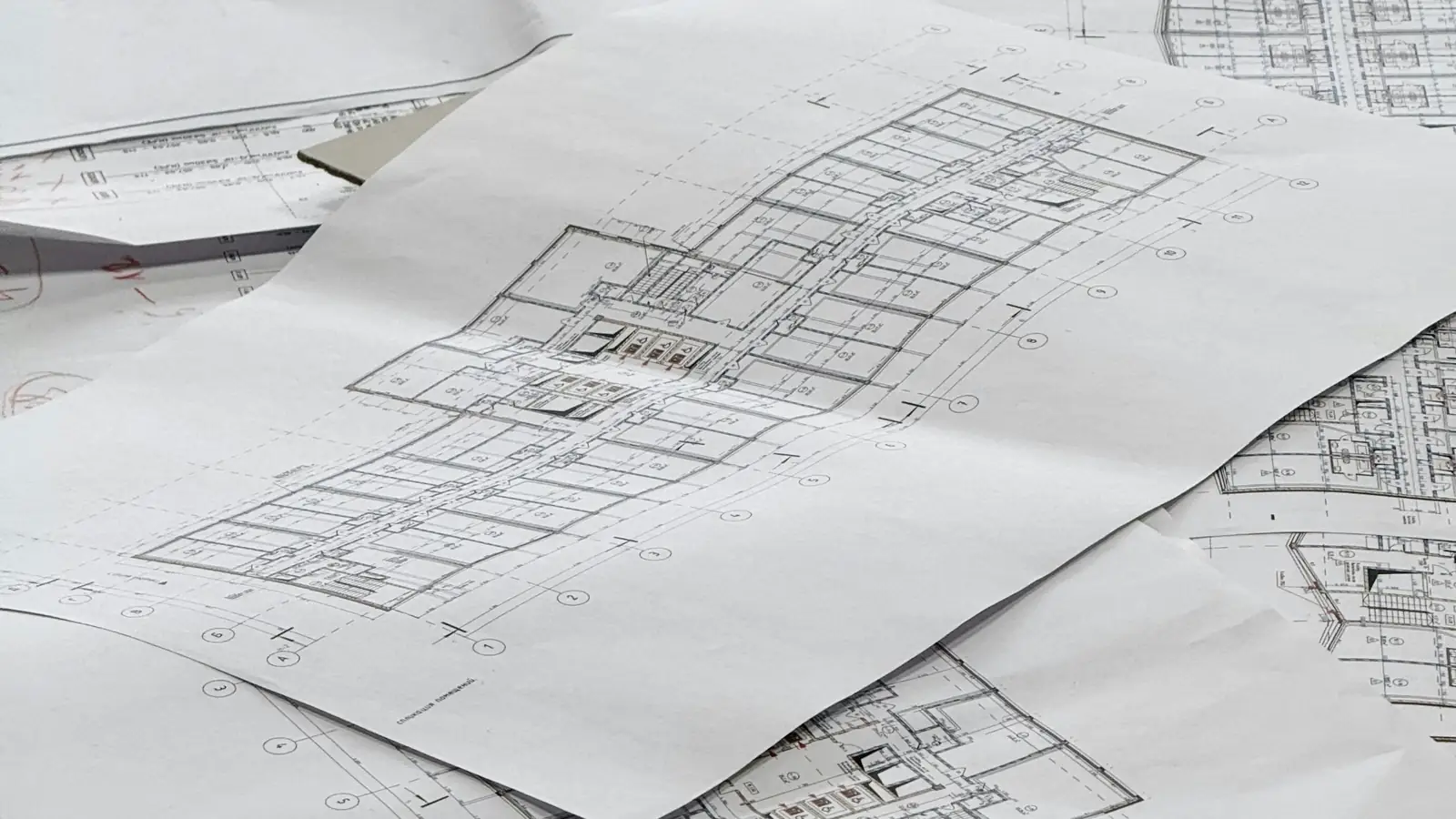
Is a quantity takeoff an estimate?
No. In the quantity takeoff vs estimate comparison, a takeoff is a measured list of quantities by unit, such as square feet of formwork or linear feet of pipe. An estimate prices those quantities with labor hours, crew rates, material unit prices, waste, general conditions, overhead and profit. The gap between them is the pricing layer.
Quantity Takeoff vs Estimate: Definitions That Actually Differ
The difference between takeoff and estimate is the difference between a measurement and a price. A takeoff records what the drawings show: a number, a unit of measure, and the rule used to get it. An estimate takes those numbers and adds dollars, labor hours, equipment, and indirect costs on top.
That distinction matters because a takeoff is an input, not an estimate. A takeoff sheet that reads "slab on grade — 1,850 square feet" is complete as a quantity and useless as a bid until someone prices the concrete, the reinforcement, the finishing labor and the formwork. Treating the two as one step is how quantities get priced twice or missed entirely.
In the quantity takeoff and estimating sequence, the takeoff is the first controlled measurement pass, organized by CSI MasterFormat division so that every line item lands in the same cost code the estimate uses. The estimate is the second pass, where each line item receives a unit price and a productivity rate. Reading the quantity takeoff vs estimate question this way also settles who signs off on which number.
| Attribute | Quantity takeoff | Detailed estimate |
|---|---|---|
| Primary output | Measured quantities with units | Priced line items and totals |
| Unit of measure | Square feet, linear feet, cubic yards, each | Same unit, priced per unit |
| Measurement rule | Stated per line item | Inherited from the takeoff |
| Labor content | None | Labor hours times crew rate |
| Indirect costs | None | General conditions, overhead and profit, contingency |
| Source document | Plan sheets and specifications | Takeoff sheet plus subcontractor quotes |
| Review test | Can a second estimator reproduce the number? | Does the total survive bid leveling? |
What a quantity takeoff produces
A takeoff produces a measured quantity record: line items, units, quantities, and the measurement rule behind each one. For a wall, that means linear feet of wall, square feet of one face, and a stated deduction rule for openings above a threshold you write down. The deliverable is a measured record, not a price.
A defensible takeoff also carries its scale calibration, the plan sheet and revision it was measured from, and any assumption made where the drawings are ambiguous. Those notes are what let a reviewer reproduce the number instead of trusting it.
What a detailed estimate produces
A detailed estimate produces a priced document: quantity times unit price, labor hours times crew rate, equipment, general conditions, overhead and profit, and contingency. It also carries the assumptions sheet and any alternates or allowances the bid documents require.
The estimate is where a priced bid basis becomes comparable across bidders, because the pricing basis is written down next to the quantity rather than buried in a lump sum.
Where the two overlap
The overlap is the line item and the unit of measure. Both documents should use the same cost code and the same unit, so that a square feet quantity on the takeoff becomes a square feet unit price in the estimate without conversion. When the units diverge, the handoff breaks.
The table below sets the two side by side on the attributes that decide who owns which number, which is the practical answer to quantity takeoff vs estimate.
Where the Takeoff Ends and the Estimate Begins
The boundary sits at the point where a measured quantity acquires a price basis. Everything before that point answers "how much"; everything after answers "how much does it cost, and why." Writing that boundary down is what keeps the takeoff and estimating process auditable from the opening summary back to the plan sheet.
What is included in a quantity takeoff is deliberately narrow: dimensions, counts, units, waste factors where the trade calls for them, and the measurement rules applied. What is excluded is equally deliberate — no labor rates, no equipment, no markup. Those belong to the detailed estimate, which also carries the AACE estimate class that tells the reader how much design information the number rests on. The quantity takeoff vs estimate distinction is really a distinction between measurement and judgment, and each document should show only its own side of that line.
Measured quantities and units
The takeoff closes with quantities in trade units. Concrete comes out in cubic yards, rebar in linear feet and pounds, roofing in squares, doors and windows in counts from a count takeoff, and finishes in square feet. Each quantity carries the rule that produced it, such as whether openings under ten square feet were deducted.
A construction takeoff that stops at the quantity is finished work. It should not contain a dollar sign anywhere.
Pricing, labor, and indirect costs
The estimate opens with unit prices, then multiplies labor hours by productivity rates and crew rates, then adds equipment, general conditions, contingency, escalation, overhead and profit. Each of those layers is a separate decision with its own source, and each should be visible on the sheet.
The pricing basis is where published wage and price data enter. The wage table below shows current national medians by trade, and the producer price movements for lumber, ready-mix, steel and copper wire are what drive material escalation between the takeoff date and the bid date.
The handoff point in the workflow
Take a 6-inch slab over 2,400 square feet. The takeoff measures 2,400 square feet at 0.5 feet thick, which is 1,200 cubic feet, or 44.44 cubic yards, before waste. With a 5% waste factor the order quantity is 46.67 cubic yards. That is the end of the takeoff.
The estimate begins there: 46.67 cubic yards times the placed unit price for reinforced slab concrete, plus finishing labor at a stated productivity rate, plus formwork at the perimeter, plus the pump or chute allowance. If the slab quantity is later revised, only the takeoff side changes and the pricing rules re-apply — which is the whole reason to keep the two documents separate. That separation is also the practical answer to the quantity takeoff vs estimate question: one document measures, the other prices, and neither substitutes for the other.
How a Quantity Takeoff Feeds a Detailed Estimate
The quantity takeoff definition that survives a bid review is short: a measured, unit-labeled record of what the drawings require, produced under stated rules. The estimate is what happens when that record is priced. The sequence below is the takeoff to estimate workflow we follow, and it runs in one direction.
One clarification on the quantity takeoff vs estimate question: a unit price estimate prices a small set of composite units, while a detailed estimate prices every line item from measured quantities. The detailed estimate is the one that can be traced back to the takeoff, line by line.
Slab quantity takeoff
- Area
- 2,400 sq ft
- Volume
- 800 cu ft
- Net concrete
- 29.63 cu yd
- Order quantity
- 31.11 cu yd
Formula: length × width × (thickness ÷ 12) ÷ 27 = cubic yards. Thickened edges, footings and pump waste are taken off separately.
Step 2: apply pricing and productivity
Each quantity then receives a unit price built from material cost, labor hours at a productivity rate, and equipment where the trade needs it. A concrete line item carries placement labor, finishing labor and any pump cost; a rebar line item carries tying labor per ton. The unit of measure on the estimate must match the takeoff exactly.
Productivity rates are the most sensitive input and the least visible. State them on the assumptions sheet so a reviewer can challenge the rate instead of the total.
Step 3: add indirects and contingency
Indirects close the estimate: general conditions for supervision and temporary facilities, contingency sized to the AACE estimate class and the outstanding request for information items, escalation to the bid date, and overhead and profit. Alternates and allowances from the bid documents get priced separately so bid leveling can compare like with like.
When the estimate is delivered, the priced cost estimate package should let a reviewer walk from the opening summary to any line item and back to the plan sheet it came from. That traceability is the point of keeping takeoff and estimate as two documents rather than one.
Why Mixing Up Quantity Takeoff vs Estimate Costs Money
The failure starts when one document tries to do two jobs. A takeoff without pricing rules gives you measured material quantity and nothing to multiply it by, so someone downstream invents a unit price from memory. An estimate without measured quantities gives you a dollar total with no path back to the plan sheet it came from. Both look finished on the cover page.
The traceability gap is what shows up as an overrun. When a quantity cannot be traced to a sheet, a scale calibration, and a measurement rule, no one can tell whether a low bid came from a cheap subcontractor quote or from a missed wall section. Bid leveling then compares numbers that were never measured the same way. Our construction takeoff mistakes review covers how far one unmeasured area can travel through a bid.
Keep the material takeoff vs cost estimate split clean: the takeoff owns quantities and units, the estimate owns pricing, labor hours, and markup.
| Failure mode | Where it originates | What the reviewer sees | Control that prevents it |
|---|---|---|---|
| Unpriced quantities | Takeoff released without pricing rules | Line items with quantity but no unit price | Pricing basis column on every line |
| Unmeasured totals | Estimate built from allowances | Round dollar figures, no sheet reference | Require a sheet and detail reference per line |
| Scope gap | Incomplete drawing set read | Low total in one CSI division | Sheet index sign-off before takeoff starts |
| Double-counted scope | Trade quote carried beside own takeoff | Total above market for one division | Exclusion note per subcontractor quote |
| Waste applied twice | Takeoff and pricing both add waste | Material quantity above delivered quantity | Single waste rule stated on the takeoff sheet |
Missing scope in the takeoff
A takeoff built from the floor plans alone misses the roof plan, the site utility plan, and the general notes sheet where the alternates live. On a masonry building, skipping the structural sheets drops the reinforcing steel count entirely. The estimate that follows is arithmetically correct and still short by a scope package. Every takeoff should open with a sheet index check so the reviewer can confirm each drawing was read.
Pricing errors in the estimate
A detailed estimate definition is a priced document: every line item carries a unit price, a productivity rate, and a basis. When the pricing step borrows a unit price from a different project type, the error is invisible because the quantity is right. Steel mill products and copper wire and cable are among the most volatile inputs on a job, so a stale unit price on those divisions carries real risk. Pricing needs a date and a source, not just a number.
Double-counting and omissions
The same block wall can appear in the masonry takeoff and again inside a subcontractor quote carried as a lump sum. One of the two has to be excluded, and the estimate needs a note saying which. Waste factor is the other common trap: applying a waste percentage at the takeoff stage and again at the pricing stage inflates the material quantity without anyone noticing. State the waste rule once, on the takeoff sheet, and let the estimate consume it.
Which Do You Need First: Quantity Takeoff or Estimate?
The order depends on what decision you are making this week. A conceptual or budget figure can be produced from square footage and building type before any measuring happens, and that is a legitimate early deliverable. A detailed estimate cannot be produced that way, because every line item needs a measured quantity behind it. The takeoff to estimate workflow is sequential for a reason: quantities first, pricing second.
A quantity takeoff is not a substitute for a detailed estimate. It tells you how much, not how much it costs. If a lender, a bond agent, or a owner's rep is asking for a number to sign, you need the priced document, not the measurement sheet.
When you only need quantities
Order a takeoff alone when you are buying material, checking a supplier's quote, or preparing a scope package for subcontractors to price. Concrete cubic yards, rebar tonnage, drywall square feet, and a count takeoff of doors and fixtures are all deliverable without a dollar figure attached. This is also the right scope when you plan to price the work in-house and only want an independent measurement to check your own sheet.
When you need a full detailed estimate
Ask for the priced document when the number goes into a bid, a loan application, or a guaranteed maximum price. That means labor hours per line, crew rate, general conditions, overhead and profit, contingency, and escalation to the bid date. Each of those sits on top of a measured quantity, so the takeoff has to exist first. Our priced estimating service is built in that order, never from a lump sum backward.
How to sequence both
Start with a complete drawing set and a scale calibration check on each plan sheet, then measure and record units and rules. Price the measured lines, apply waste and markup once, and reconcile the total against the budget figure you started with. Where the two disagree, the difference points to either a scope gap or a pricing assumption, and both are findable because the arithmetic is visible. The step-by-step method is set out in our guide on how to estimate construction costs.
Making Quantity Takeoff vs Estimate Traceable on Your Next Project
The question is a takeoff an estimate has a short answer: no, and the difference is the audit trail. A traceable file lets a reviewer pick any dollar on the summary, walk back to the quantity, then to the plan sheet, then to the measurement rule that produced the quantity. That chain is what we build on every project, and it is why our professional quantity takeoff services deliver marked-up drawing pages beside the workbook.
Traceability is not extra paperwork. It is the difference between a number you can defend in a bid leveling meeting and a number you have to re-measure under time pressure.
| Record | What it holds | Example entry | Who checks it |
|---|---|---|---|
| Plan sheet reference | Drawing number and revision | A-201, rev 3 | Takeoff reviewer |
| Measurement rule | How the quantity was measured | Wall centerline, linear feet | Takeoff reviewer |
| Quantity and unit | Measured amount with unit | 240 linear feet, 8-inch CMU | Estimator |
| Waste rule | Single stated allowance | 5 percent, stated once | Estimator |
| Cost code | CSI division and line | 04 20 00 masonry | Estimator |
| Labor basis | Crew rate and productivity | Crew rate and hours per unit | Estimator |
| Data vintage | Wage and price refresh date | Recorded on summary tab | Client and reviewer |
Documenting units and measurement rules
Every line states its unit and the rule used: linear feet measured along the wall centerline, square feet of form contact area, cubic yards of compacted volume. A reviewer should be able to re-measure one line and land on the same quantity. Where a rule is ambiguous, the assumptions sheet records the choice so the request for information can be issued against it rather than settled by guesswork.
Linking quantities to pricing
Each quantity carries a cost code from the CSI MasterFormat division structure, so the pricing step knows which labor and material rates apply. A line of 240 linear feet of 8-inch CMU wall at a stated crew rate and productivity rate produces labor hours by division, not by intuition. When a rate changes, the affected lines are identifiable instead of buried in a total.
Audit-ready estimate files
The deliverable is an Excel workbook and a PDF summary with marked-up drawing pages, organized so a third party can follow the arithmetic without calling us. Public wage and producer price data sit behind the rates, and the refresh date is recorded so a reviewer knows which vintage of data priced the job. Our priced construction estimating work follows the same file standard, and you can send your plans to start the review.
Frequently Asked Questions
Is a quantity takeoff the same as an estimate?
No. A quantity takeoff counts and measures material and work items in the units the trade buys them in, such as square feet of formwork or linear feet of pipe. An estimate multiplies those quantities by unit prices, labor hours and crew rates, then adds general conditions, overhead and profit. The quantity takeoff vs estimate distinction is quantities versus priced quantities.
What comes first, a quantity takeoff or an estimate?
The takeoff comes first. You cannot price a line item until you know its quantity and unit of measure, so the takeoff sheet is the input to the estimate. Some estimators build both at once on the same sheet, but the sequence in the takeoff to estimate workflow is always measure, then price, then roll up.
Can you do a detailed estimate without a quantity takeoff?
Not a defensible one. A detailed estimate definition requires each line item to trace to a measured quantity; without that, pricing falls back to allowances or square-foot ratios, which is a unit price estimate rather than a detailed one. You can produce a budget that way, but you cannot show where the number came from.
What is the difference between a material takeoff and a detailed estimate?
A material takeoff lists quantities only: concrete in cubic yards, rebar in tons, drywall in square feet, with waste factors noted. A detailed estimate adds labor hours at a productivity rate, crew rates from published wage data, equipment, general conditions, contingency and overhead and profit. The material takeoff is one input; the estimate is the priced whole.
How does a quantity takeoff improve estimate accuracy?
It replaces guesses with measured quantities tied to a stated measurement rule, so two estimators counting the same plan sheet reach the same number. Pricing errors then show up as unit price questions rather than hidden quantity errors. It also makes bid leveling possible, because every subcontractor quote can be checked against the same quantities.
What are common mistakes when moving from takeoff to estimate?
The frequent ones are mixing units, such as pricing square feet of wall against linear feet of studs, dropping waste factors on cut materials, and pricing a scope twice because two divisions both list it. Missing an addendum or an unanswered request for information is another. Each error survives into the bid unless the takeoff sheet and estimate share one cost code structure.
How do you handle waste factors and units in a takeoff?
We state the measurement rule and the waste factor on the assumptions sheet for each line item, so a reader can see that 1,200 square feet of 5/8-inch drywall became 1,260 square feet at a 5 percent waste allowance. Typical waste ranges vary by material and cut pattern, and we name the allowance we applied rather than burying it in the unit price.
Do you sign NDAs before reviewing drawings?
Clients can request one before sending drawings, and the terms are agreed before plan review begins. Send the request with your plan set and we will confirm the arrangement before any takeoff work starts.