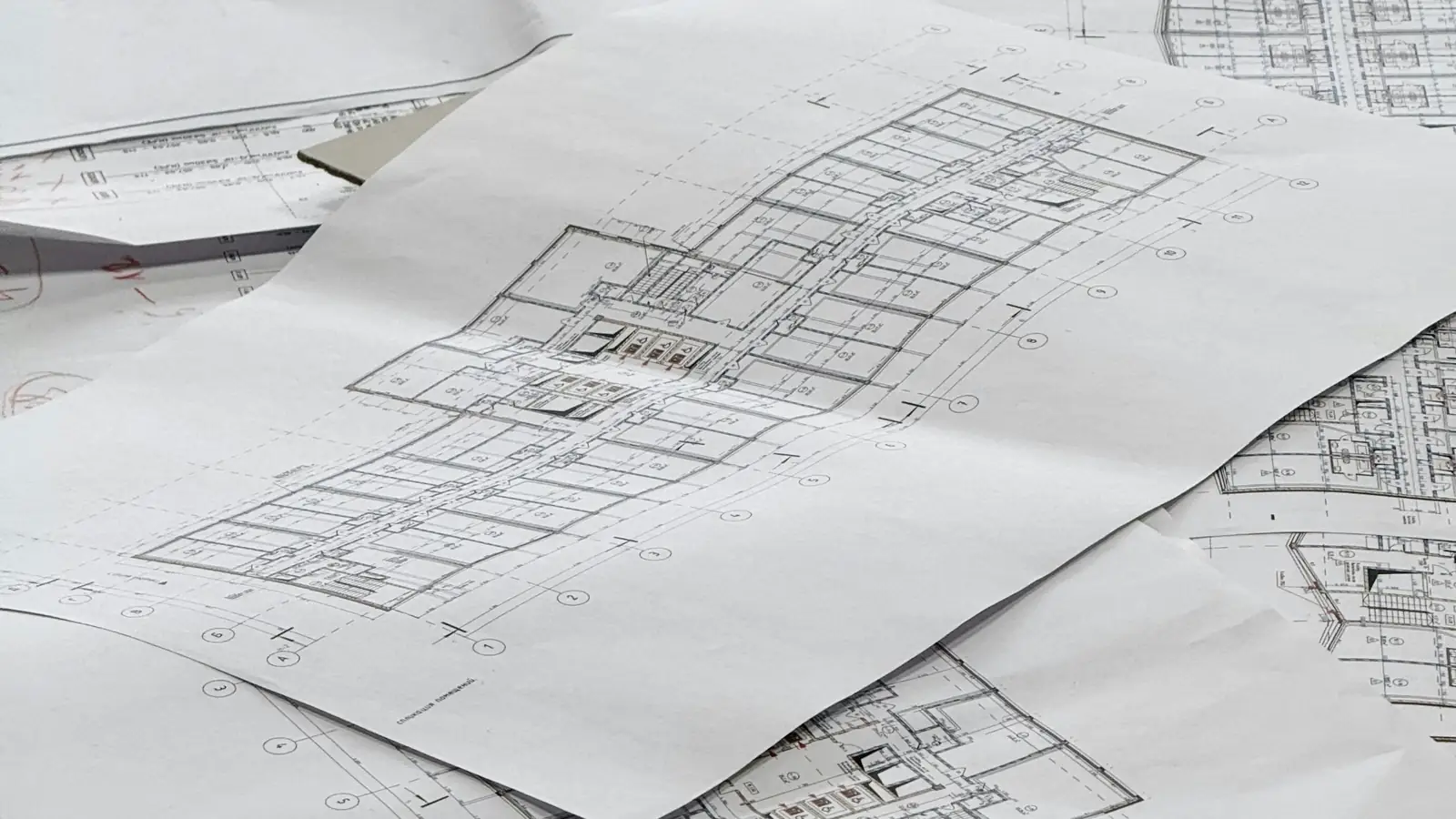
What are the most common construction takeoff mistakes?
The most common construction takeoff mistakes are scale miscalibration, missed addenda and revisions, unit-of-measure mismatches, double counting shared assemblies, omitted scope, and waste factors applied to the wrong lines. Each one shifts quantities in a single direction, so the bid either prices work that is not there or misses work that is.
Why Construction Takeoff Mistakes Are Costlier Than They Look
A takeoff error is rarely a single wrong number on the sheet. It is a wrong number that gets carried into the pricing spreadsheet, the bid package, the purchase order and the schedule before anyone notices. On a 40,000 sq ft building, a 10% miss on a ready-mix line priced per cubic yard is not a rounding problem; it is a quantity that was priced, sold and promised at the wrong level. That is why construction takeoff mistakes made in the first week of a bid show up as margin loss in the last month of the job.
Traceability is the defense. Every line on a bid-ready takeoff should show the unit, the measurement rule, the arithmetic and the source of the price. When a line cannot be traced back to a sheet, a detail or a specification section, it is a candidate for the kind of double counting that inflates a bid and the kind of scope gap that erodes it. Our quantity takeoff page walks through how a traceable sheet is built from the sheet index forward.
Square-foot budget calculator
- Hard cost
- $444,000
- Soft costs
- $53,280
- Contingency
- $49,728
- Escalation
- $21,880
- Budget total
- $568,888
- All-in per sq ft
- $237
Enter your own base rate from a recent bid, cost book or estimator. The default values are placeholders for the math, not market prices.
The ripple effect: from takeoff error to change order
A missed 10% on a major material does not stay in the takeoff. Suppose a concrete package carries 1,200 cubic yards at $180 per cubic yard, or $216,000. A 10% shortfall is 120 cubic yards, or $21,600 of material that was never in the bid. Add placing labor of roughly 0.5 labor hours per cubic yard at a loaded rate near the cement mason median shown in the wage table below, and the labor miss is another 60 hours. If the bid was won at a 6% markup on a $216,000 package, that markup is $12,960, so the $21,600 material gap alone wipes out the profit and turns the line into a change order conversation the contractor may not win.
Hard costs vs. soft costs of a bad takeoff
Hard costs are the material, labor and equipment lines that move directly with quantity. Soft costs are the schedule, supervision, rework and financing that follow a bad line into the field. A takeoff that understates Division 03 concrete quantities rarely stops at concrete; it pushes the pour sequence, ties up the crew and can delay the trades behind it. The calculator below lets you test that spread: enter building area, your own base hard cost per sq ft, soft-cost percentage, contingency and escalation, and it returns hard cost, soft costs, contingency, escalation, budget total and all-in cost per sq ft. It contains no prices of its own, so the result is only as good as the base cost you supply.
The 7 Most Common Construction Takeoff Mistakes
Most errors on a takeoff sheet fall into a short list, and each one has a recognizable signature on the page. Plan reading errors show up as a quantity that contradicts the specification section; waste errors show up as a clean net number with no order quantity; unit errors show up as a line that cannot be multiplied by a price. The inaccurate takeoff cost impact is rarely visible at the line level, which is why a takeoff quality control pass run separately from the first pass matters more than speed. Two of the most frequent construction takeoff mistakes are covered below in the order they surface on a review.
A practical test for any line: can you name the sheet, the unit, the measurement rule and the arithmetic in one sentence? If not, the line is not ready for pricing. Our types of construction takeoffs guide shows how the same discipline differs across material, quantity and bid takeoffs.
Slab quantity takeoff
- Area
- 2,400 sq ft
- Volume
- 800 cu ft
- Net concrete
- 29.63 cu yd
- Order quantity
- 31.11 cu yd
Formula: length × width × (thickness ÷ 12) ÷ 27 = cubic yards. Thickened edges, footings and pump waste are taken off separately.
1. Misreading plans and specifications
A slab shown as 5 in. thick on the plan but called out as 6 in. in the specification section is a classic conflict, and the thicker section governs unless an addendum says otherwise. On a 10,000 sq ft slab, that inch is 10,000 sq ft times 1/12 ft, or about 833 cubic feet, roughly 30.9 cubic yards of concrete that never made the sheet. Read the drawing revision, the sheet index and the specification together, and log every conflict in writing before pricing. This is the most expensive of the common takeoff errors construction teams carry into a bid, because the missing volume never appears as a line anyone can question.
2. Ignoring waste factors and overlaps
Net quantities and order quantities are different numbers. A takeoff that reports 100 square feet of wall board with no waste factor is a pricing input, not a purchasing instruction. Typical waste ranges vary by material and cut complexity, and the estimator should state the rule used on the sheet so the buyer can see it. Overlaps are the mirror problem: counting the same wall twice because it appears on both a plan sheet and a detail is double counting, and it inflates the bid. A second estimator reading the sheet cold, without the first pass notes, is the cheapest defense against both.
3. Unit and measurement rule errors
Division 03 concrete is bought by the cubic yard, Division 05 metals by weight or linear feet, Division 31 earthwork by cubic yards in place or in the truck. Mixing units on one sheet produces a line that looks plausible and prices wrong. The calculator below works a slab in the correct order: enter length, width, thickness and waste percentage, and it returns area, cubic feet, net cubic yards and order quantity. Note that the conversion from cubic feet to cubic yards divides by 27, and the waste percentage is applied to the net quantity, not the area. When the arithmetic is shown this way, a unit of measure error is visible before the line reaches a bid package.
How Inaccurate Takeoffs Drive Real Project Costs
The cost of bad takeoffs contractors carry is not the estimator's hours; it is the gap between what the bid assumed and what the job consumes. That gap compounds because labor, equipment and overhead all ride on the same wrong quantity. A short takeoff on a structural steel package under Division 05 metals, for example, cuts the material line, the erection hours and the crane time in one move, and the bid looks competitive for exactly the wrong reason.
The quantity takeoff mistakes to avoid are the ones that hide in plain sight: a scale that was never checked against a known dimension, a scope gap between the base bid and an allowance, a sheet that was superseded by an addendum. Run a second pass against the bid leveling sheet before submission, or route the package through a second-opinion audit of the estimate so a fresh set of eyes checks the unit, the rule and the arithmetic.
| Error | Line affected | Illustrative miss | Cost impact | Margin effect at 6% markup |
|---|---|---|---|---|
| 10% quantity shortfall | Division 03 concrete | $21,600 material | $21,600 plus 60 labor hours | Markup of $12,960 erased |
| Missing scope | Division 26 feeders | $18,000 material | $18,000 at current copper pricing | Markup of $12,960 erased |
| Double-counted wall area | Division 09 gypsum board | 8% overstatement | Bid inflated, job lost on price | No award, no margin |
| Uncalibrated scale | Division 31 earthwork | 5% volume error | $9,500 in haul and compaction | Absorbed from overhead |
| Waste applied twice | Division 06 millwork | 10% extra order | $7,200 idle material | Absorbed from overhead |
Loaded labor rate calculator
- Loaded rate
- $31/hr
- Blended with overtime
- $32/hr
- Labor hours
- 320
- Crew labor cost
- $10,279
Burden covers payroll taxes, workers’ compensation, insurance and benefits; it varies by state, trade and company. Overtime is priced at time and a half.
Bid errors: winning the job at a loss
Winning a job at a loss usually starts with a missing scope in takeoff bids that nobody caught during bid leveling. If the electrical package omits Division 26 feeder wire and the copper line moves sharply, as the Producer Price Index for copper wire and cable shows in the chart below, the omission is priced at last year's level and delivered at this year's. The fix is a line-by-line scope matrix tied to the specification sections, signed off before the bid is sealed.
Material overages and waste
Overages come from two directions: a waste factor applied twice, and a quantity counted from both the plan and the detail. State the waste rule once per material and reconcile the order quantity against the net takeoff before release.
Labor productivity assumptions gone wrong
Labor hours are a quantity times a productivity rate, and both sides can be wrong. Scale calibration errors change the quantity; optimistic productivity changes the rate. The calculator below takes base wage, burden percentage, share of hours at overtime, crew size and hours, and returns loaded rate, blended rate with overtime, labor hours and crew labor cost. Use it to test whether the rate on the sheet survives burden and overtime before the crew cost is carried into the bid. The wage table below shows the BLS medians the loaded rate should be built from.
A Traceable Takeoff Process: Preventing Mistakes Before They Happen
A traceable takeoff is built in a fixed sequence, and every step leaves a record. Start with the sheet index and confirm the revision set is complete, including every addendum, before measuring anything. Calibrate the scale on each sheet rather than trusting the title block, because a scanned or resized PDF will measure short and quietly understate areas. Then measure by CSI MasterFormat division so that Division 03 concrete, Division 05 metals and Division 26 electrical quantities land on separate takeoff sheets with their own rules.
The estimator signs each sheet, records the drawing revision measured, and writes the measurement rule beside the quantity. A wall measured to the stud face and a wall measured to the finished face differ by the thickness of the board, and only the note tells the next reader which was used. When a revision arrives, the sheet is re-measured and the delta is logged rather than overwritten, so the bid file shows what changed and when. Our quantity takeoff services follow this pattern, and the output is an Excel workbook and PDF summary with marked-up drawing pages.
Material price movement, Oct 2023 to Sep 2026
Standardized measurement rules and units
Write the unit of measure and the rule on every line: square feet for formwork contact area, cubic yards for concrete, linear feet for pipe and conduit, count each for fixtures and devices. State whether openings over a threshold are deducted and what that threshold is. Unit of measure errors are the most expensive kind because they survive review; a slab priced in square feet instead of cubic yards looks plausible on the page and wrong only in the total. The quantity takeoff example walks through the arithmetic for a single assembly so a reviewer can check the rule, not just the number.
Checklists and peer review
A construction takeoff accuracy checklist should name the failure modes, not just the divisions: scale verified, addenda logged, waste factor stated per material, openings deducted, penetrations counted, allowance lines flagged. A second estimator reviews a sample of lines against the marked-up sheets and signs the takeoff sheet. Peer review catches double counting takeoff quantities, where an item appears in both a Division 26 electrical package and a general conditions line, and it catches scope that was measured but never carried into the bid.
Digital takeoff tools with audit trails
Tool categories matter less than what they record. A digital takeoff in estimation should store the measurement, the sheet and revision it came from, the unit, and the user, so any quantity can be traced back to a mark on a drawing. Export the audit trail with the workbook. The chart below shows the Producer Price Index series for the materials in this scope, rebased to 100, which is how a cost estimator tests whether a takeoff priced months ago still reflects material movement. Our construction takeoff services deliver the marked-up pages alongside the quantities for exactly this check.
When to Bring In a Second Opinion on Your Takeoff
Bring in an outside review when the bid is large relative to the company's balance sheet, when the scope is unfamiliar, or when the takeoff was produced under time pressure with revisions still arriving. The same trigger applies when a single division dominates the price, such as Division 31 earthwork on a site with variable soils, because one wrong assumption there moves the total more than a dozen small lines. A second opinion is also warranted before a negotiated bid where the owner will compare your number against a competitor's.
Takeoff error consequences on projects rarely stay inside the bid. A short quantity becomes a change order at the subcontractor's price plus overhead, and a long quantity becomes a lost job or a margin given away at bid leveling. The independent estimate review and audit targets the lines where that exposure is concentrated rather than re-measuring the whole set.
Contingency range by estimate class
- Low contingency
- $150,000 (10%)
- High contingency
- $300,000 (20%)
- Budget range
- $1,650,000 – $1,800,000
Typical planning ranges that follow the AACE estimate-class idea: less design, more contingency. Set the final figure from a risk review of your own project.
Red flags that your takeoff may be off
Round numbers everywhere, no waste factor on cut materials, and quantities that match the previous project exactly are all signals to look closer. So is a division with no allowance or contingency line, or a takeoff where the unit of measure errors were never checked against the specification section. If the marked-up drawings cannot answer where a quantity came from, treat the line as unverified until someone can.
What an estimate review covers
A review checks the measurement rules and units, re-measures a sample of high-value lines, confirms the revision set and addenda are complete, and tests labor rates and material pricing against current public data. It also looks for scope gap between divisions and for waste factor assumptions that are stated nowhere. Findings come back as line-item corrections with the arithmetic shown, so the reviewer's work is as traceable as the original takeoff.
Cost vs. benefit of an audit
Compare the review fee against the value of the lines it touches. As an illustrative example, a $1,200,000 bid with a 6% contingency carries $72,000 of cover; if the review finds a 3% net correction, that is $36,000 moved from contingency into a known position. The calculator below returns a low and high contingency and budget range from a base estimate and an AACE estimate class, which shows how much uncertainty a Class 4 or Class 5 takeoff legitimately carries before anyone is at fault.
Building a Mistake-Resistant Takeoff Culture
Culture shows up in what gets written down. When every estimator records the rule, the revision and the source beside each quantity, how to prevent takeoff mistakes stops being a personal skill and becomes a property of the company. The supervisor who can open last year's workbook and see why a wall was measured to the stud face is the same supervisor who can defend the number in a bid leveling meeting.
Traceability also sets the terms of the handoff. A subcontractor pricing a Division 05 package should receive the quantities, the unit, and the marked-up sheets, not a total. When the basis is visible, the sub prices the same scope you measured, and disagreements surface before the bid rather than at the punch list. Our professional quantity takeoff services are built to hand over that basis on every line.
To start, request a free quote and attach your drawings.
| Trade | 25th percentile | Median | 75th percentile |
|---|---|---|---|
| Construction laborers | — | $22.66 | — |
| Carpenters | — | $29.12 | — |
| Cement masons and concrete finishers | — | $27.41 | — |
| Electricians | — | $30.38 | — |
| Plumbers, pipefitters and steamfitters | — | $30.67 | — |
| First-line supervisors, construction trades | — | $38.42 | — |
| Cost estimators | — | $37.86 | — |
| Occupation | 25th percentile | Median | 75th percentile |
|---|---|---|---|
| Construction laborers | $18.57 | $22.66 | $28.72 |
| Carpenters | $23.32 | $29.12 | $36.94 |
| Electricians | $23.76 | $30.38 | $40.36 |
| Plumbers, pipefitters and steamfitters | $24.13 | $30.67 | $40.92 |
| Cement masons and concrete finishers | $22.60 | $27.41 | $32.15 |
| First-line supervisors, construction trades | $30.48 | $38.42 | $48.78 |
| Cost estimators | $29.40 | $37.86 | $48.97 |
Base wages before payroll taxes, insurance and benefits. Source: BLS Occupational Employment and Wage Statistics, national, all industries.
Training and accountability
Assign ownership by division and review the takeoff sheet against the checklist before it leaves the desk. New estimators should measure a small set twice, once manually and once digitally, and reconcile the difference; the gap teaches more than any lecture. Track corrections found in review by type, because a recurring waste factor takeoff errors pattern points to a training gap rather than a careless individual.
Leveraging technology without losing traceability
Automation accelerates measurement but does not document assumption. Keep the audit trail switched on, export it with the workbook, and require that any auto-counted symbol be spot-checked against the drawing. A count of devices on Division 26 electrical sheets is only as good as the legend it was matched to, and a legend mismatch produces a confident, wrong count. The manual vs digital takeoff comparison covers where each method earns its place.
Continuous improvement from post-mortems
After each bid, compare the takeoff to the buyout and to the final cost, and write the variance against the line that caused it. A scope gap found at buyout should become a checklist item the same week. The wage table below shows national hourly percentiles for the trades whose labor rates sit behind these quantities, which is the reference point for judging whether a labor line was priced from current data or from habit.
Frequently Asked Questions
What is the most common mistake in construction takeoffs?
Missing scope is the most common construction takeoff mistakes category we see. A sheet gets skipped, an addendum never reaches the takeoff sheet, or a specification section is read as a note rather than a priced item. The gap stays invisible until bid leveling, when another bidder carries the item and your number looks low in a way that cannot be explained.
How much can an inaccurate takeoff cost a contractor?
The cost equals the quantity error multiplied by the installed unit cost, plus the labor hours spent reworking the scope. A slab taken off in square feet instead of cubic yards, or a wall counted twice, moves the bid by the full value of that line. The fee to have a takeoff checked depends on sheet count, disciplines and drawing quality, and we quote it after reviewing the plans.
How do you check a construction takeoff for errors?
Run a cross-check: compare totals against a second measurement method, reconcile the sheet index against the takeoff sheet, and confirm every addendum is logged. Then verify units line by line and re-foot the arithmetic. A construction takeoff accuracy checklist with these four gates catches most errors before the bid package leaves the office.
What is the difference between a takeoff error and an estimate error?
A takeoff error is a wrong measured quantity, unit or scope inclusion. An estimate error is a wrong price applied to a correct quantity, such as a stale material price or the wrong labor rate for the trade. Separating the two matters because the fix differs: remeasure the drawing for one, reprice the line for the other.
Can takeoff mistakes be fixed after the bid is submitted?
Sometimes, but the cost moves to you. If the bid is already in, a corrected quantity becomes a change order conversation, and the general contractor may hold you to the original number. Fixing it before submission costs an hour of checking; fixing it after award costs margin on the whole line.
What tools help reduce construction takeoff mistakes?
Digital takeoff software with scale calibration, layered PDF markup and a built-in audit trail cuts transcription errors. Spreadsheet templates with locked formulas catch arithmetic slips. Neither replaces a second reader. The tool category matters less than the discipline of recording the unit, the measurement rule and the source sheet for every line.
Do you sign NDAs before reviewing drawings?
Clients can request an NDA before sending drawings, and the terms are agreed before plan review begins. Send the request with your project details and we confirm the arrangement before any sheets are opened.
Can you use my estimate template?
Send the template along with the plans and we confirm whether the estimate can be delivered in it. Format compatibility is checked during plan review, and any limitation is stated in the quote rather than discovered at delivery.