KNRConstructionsSend Plans

Rebar Cost Per Foot: What Drives the Number and How to Estimate It

Rebar cost per foot is a unit price, and we build it from the bar size, the weight per foot, lap and waste allowances, and the labor hours behind the placement. We serve general contractors, trade contractors and owners nationwide, returning an Excel workbook and PDF summary with marked-up drawing pages so every quantity traces back to a sheet.

  • Bar size sets weight, laps and price
  • Labor hours priced from published wage data
  • Waste and lap allowances shown, not hidden
  • Marked-up drawings accompany every workbook

Upload your plans

Send drawings and a short scope. You get a fixed price before any work starts.

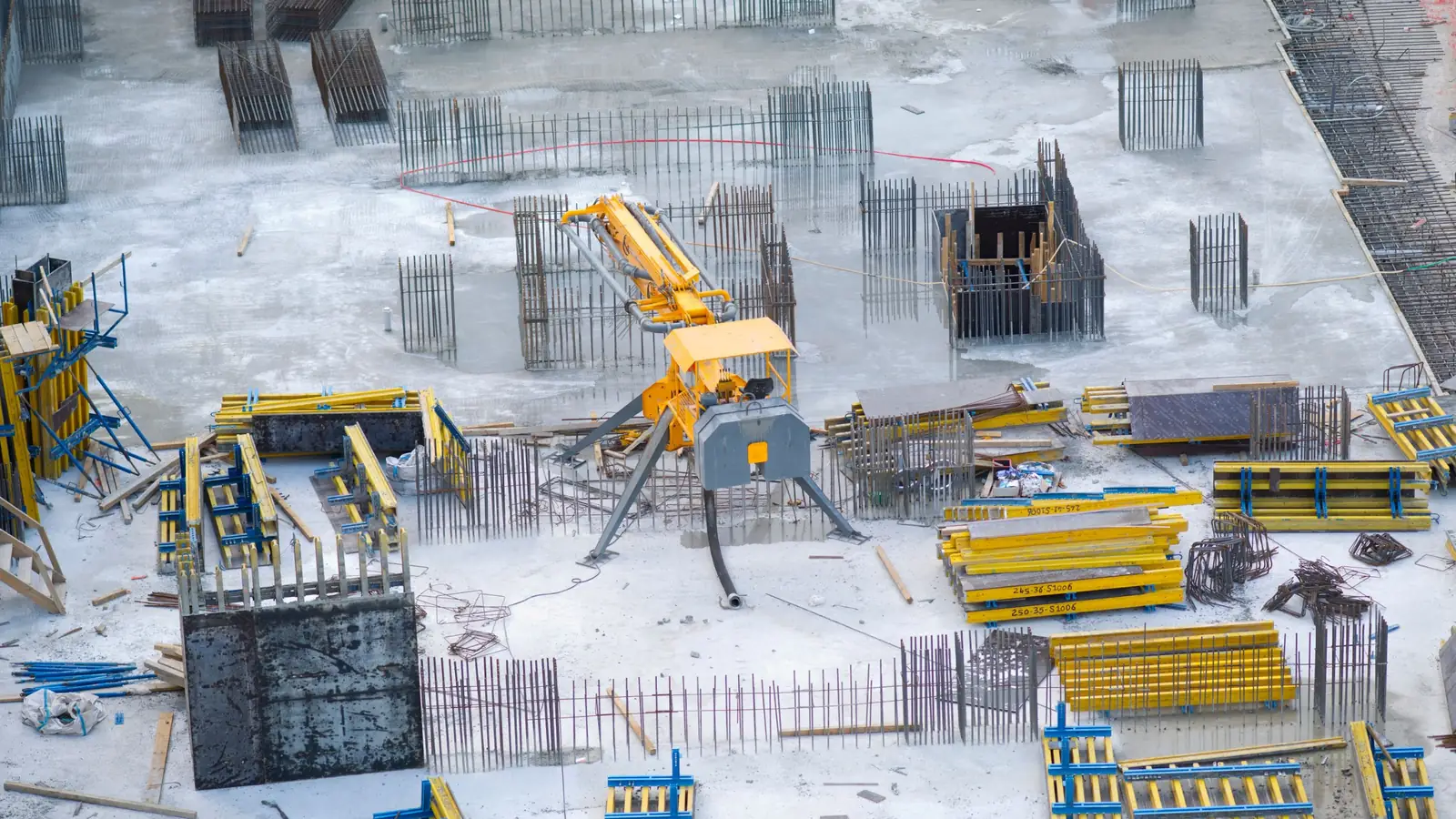
Rebar cages, column formwork and a concrete pump on a concrete deck under construction

How much does rebar cost per foot?

Rebar cost per foot depends on bar size, coating and grade, plus the labor to place it. A #4 bar carries far less steel per foot than a #5, so the material price per foot rises with bar size, and the installed rebar cost per foot adds tying, chairs and lap waste on top.

Rebar Cost Per Foot: The Unit Chain Behind the Number

A rebar price per foot is not a market quote. It is the end of a chain: bar designation sets nominal weight per foot, the mill sells by the ton, and everything between the mill and the installed bar — fabrication, laps, waste, freight — gets spread back over the purchased length. Break the chain and the number cannot be checked; keep it and any supplier quote can be reproduced on your own sheet.

The chain matters because reinforcing steel is bought by weight and installed by length. A quote in tons and a budget in feet describe the same bar, and the conversion factor is the nominal weight published for each deformed bar size in ASTM A615. That is the first column of any defensible rebar takeoff, and the reason a per-foot figure without a stated bar size means nothing.

Material index movement feeds straight into this chain. The chart below shows BLS Producer Price Index series for the materials in this scope, rebased to 100, so you can see how reinforcing steel has moved relative to ready-mix concrete and lumber; the steel line is the one that reprices a rebar budget fastest.

Material price movement, Oct 2023 to Sep 2026

85118150Oct 2023Sep 2026
Lumber and wood products: +14.6%Ready-mix concrete: +6.3%Steel mill products: +27.8%Copper wire and cable: +47.5%
Index rebased to 100 at Oct 2023. Source: U.S. Bureau of Labor Statistics, Producer Price Index (WPU081, WPU1333, WPU1017, WPU102502), updated 2026-10-25.

Bar size, weight per foot, and why #4 and #5 dominate residential work

Bar size is a diameter in eighths of an inch, and nominal weight per foot follows from it: a #4 bar is 0.668 lb/ft and a #5 bar is 1.043 lb/ft under ASTM A615. Grade 60 sets the minimum yield strength at 60,000 psi, so grade and size together define what the bar carries, not the price alone.

#4 and #5 dominate house foundations, slab-on-grade mats, and residential footings because they satisfy ACI 318 minimum ratios at spacings crews can place by hand — typically 12 in. to 24 in. o.c. — without mechanical handling. Heavier bars appear where development length and cover requirements push the design, and the weight per foot climbs with them.

From price per ton to price per foot: the arithmetic

The conversion is one line: cost per foot = (price per ton ÷ 2,000) × nominal weight per foot. At an illustrative $900 per ton, a #4 bar costs (900 ÷ 2,000) × 0.668 = $0.30 per foot and a #5 bar costs (900 ÷ 2,000) × 1.043 = $0.47 per foot. Substitute your supplier's ton price and the arithmetic holds.

The rebar cost per ton vs per foot comparison trips people up because the two quotes hide different scopes. A mill ton price may exclude cut-and-bend, freight, and any coating premium; a per-foot figure from a fabricator usually includes them. Ask which scope each number carries before you compare, and record the answer next to the rate on your sheet.

Lap lengths, hooks, and waste as a percentage of purchased length

Purchased length is longer than designed length. Lapped splices add bar at every joint — a Class B tension lap runs on the order of 40 bar diameters, so a #4 lap is roughly 16 in. and a #5 lap roughly 20 in., subject to the ACI 318 edition your building department enforces. Hooks add the bend plus extension, and cutting waste adds a typical 2% to 5% on top.

Build laps and waste into the quantity before you price, not after. A mat priced on net designed length understates the order by the lap percentage, and that gap lands in the change order. Our reinforcing steel takeoff, priced line by line shows each of these factors as a separate line so the percentage is visible rather than buried.

Worked Example: Rebar Cost Per Foot for a Slab and Footing Package

The example below is illustrative, not a quote. Every assumption is stated so you can swap in your own rates and rerun the arithmetic; the labor side uses the loaded-rate calculator below, which takes base wage, burden percentage, overtime share, crew size, and hours and returns the loaded rate, blended rate, labor hours, and crew labor cost. The wage table below gives the BLS national median hourly wage for reinforcing iron and rebar workers as the starting base wage.

Illustrative rebar package: quantities, weights, and costs (assumptions stated in the text)
Line itemBar sizeDesigned length (ft)Purchased length (ft)Weight (lb)Cost at stated rate
Slab mat, 16 in. o.c. each way#4370041162750$2,475 material
Footing longitudinal, 4 bars#5480534557$501 material
Footing ties at 12 in. o.c.#4726808540$486 material
Fabrication, $0.12/lb———3847$462
Tie wire and chairs, $0.04/lb———3847$154
Labor, 0.06 hr/lb at $48.00 loaded———231 hr$11,088
Total installed—490654573847$15,166 ($2.78/ft)

Loaded labor rate calculator

Loaded rate
$31/hr
Blended with overtime
$32/hr
Labor hours
320
Crew labor cost
$10,279

Burden covers payroll taxes, workers’ compensation, insurance and benefits; it varies by state, trade and company. Overtime is priced at time and a half.

Stated assumptions: bar sizes, spacing, lap and waste factors

Slab on grade: 40 ft × 60 ft, #4 at 16 in. o.c. each way, grade 60, black bar. Footing: 120 linear ft of 24 in. × 12 in. strip footing with four #5 longitudinal bars and #4 ties at 12 in. o.c. Material rate assumed at $0.90 per lb for black bar, fabrication at $0.12 per lb, tie wire and chairs at $0.04 per lb, lap allowance 8%, waste 3%.

Bar counts: the 40 ft direction needs 60 ÷ 1.333 + 1 = 46 bars at 40 ft; the 60 ft direction needs 40 ÷ 1.333 + 1 = 31 bars at 60 ft. Designed slab length is 46 × 40 + 31 × 60 = 1,840 + 1,860 = 3,700 ft. Footing longitudinal is 4 × 120 = 480 ft; ties are 120 ÷ 1 + 1 = 121 ties at a 6 ft cut length = 726 ft. Total designed length is 3,700 + 480 + 726 = 4,906 ft.

Quantities × unit rates, line by line

Apply laps and waste to length: 4,906 × 1.08 × 1.03 = 5,457 ft purchased (rounded). Convert to weight by bar: slab #4 at 3,700 × 1.08 × 1.03 = 4,116 ft × 0.668 = 2,750 lb; footing #5 at 480 × 1.08 × 1.03 = 534 ft × 1.043 = 557 lb; ties #4 at 726 × 1.08 × 1.03 = 808 ft × 0.668 = 540 lb. Total 3,847 lb.

Material at $0.90/lb = $3,462; fabrication at $0.12/lb = $462; wire and chairs at $0.04/lb = $154. Material subtotal is $4,078, or $4,078 ÷ 5,457 = $0.75 per purchased foot. Labor is priced separately below, and this is where a rebar cost per foot installed with labor diverges from the material figure.

Rolling up to a delivered-and-installed cost per foot

Assume 0.06 labor hours per lb placed and tied: 3,847 lb × 0.06 = 231 hours. At an illustrative loaded rate of $48.00 per hour, labor is 231 × 48 = $11,088. Total installed cost is $4,078 + $11,088 = $15,166, or $15,166 ÷ 5,457 = $2.78 per purchased foot. Material alone was $0.75, so labor is roughly three-quarters of the installed number.

That split is the answer to how much does rebar cost per foot in most budgets: the bar is the smaller half. Run your own wage and burden through the calculator below before you trust any installed rate, and see our concrete estimating services for the concrete side of the same package.

What Drives Rebar Cost Per Foot Up or Down

Two budgets with identical drawings can differ by more than a dollar a foot installed. The difference sits in levers you can price locally: mill pricing and freight, bar size and coating, fabrication scope, and jobsite access. None of them require a national average — each requires a stated assumption on your sheet.

Start with the quantity itself. Rebar quantity per cubic yard of concrete is a useful early check: a lightly reinforced slab may run well under 100 lb per cubic yard while a heavily reinforced footing can run several times that, and the ratio tells you whether a per-foot rate is being applied to the right volume. Confirm the ratio against your own takeoff before using it as a budget check, and see the quantity takeoff example for the line-item format.

Mill pricing, scrap surcharges, and regional freight

Mill pricing moves with scrap and steel demand, and the BLS Producer Price Index for steel mill products in the chart above shows how far that series can travel in twelve months. Order size matters too: a full mill bundle and a broken-stick order do not carry the same price per pound, and small orders attract cutting and handling charges.

Freight is distance and weight. Rebar is heavy and ships poorly, so a fabricator 40 miles away and one 400 miles away quote different delivered numbers for the same bar. Ask for the freight line separately so the per-foot rate is comparable.

Bar size, grade, coating (black vs. epoxy vs. galvanized)

Rebar cost per linear foot by bar size rises with nominal weight, not linearly with diameter, because weight per foot scales with the square of the bar size number. A #4 bar at 0.668 lb/ft and a #8 bar at 2.670 lb/ft differ by a factor of four in weight, so the per-foot material spread is wide even at one ton price.

Coating adds a premium on top: epoxy-coated bar costs more per pound than black bar and adds handling care at cuts and bends, while galvanized carries a further premium. Grade 60 is the default; higher grades cost more and change development length, which changes the lap percentage.

Fabrication, cut-and-bend, and site access

A bending schedule turns a bar list into fabricated bundles, and cut-and-bend charges are quoted per piece or per pound depending on the shop. Hooks, stirrups, and ties carry more fabrication per pound than straight bar, so a footing package with 121 ties prices differently from the same weight in straight longitudinal bar.

Site access sets rebar installation cost per foot as much as wage does. Bundles staged far from the pour, upper-floor placement without a crane, congested mats that slow tying, and bar spacing tight enough to block a hook all raise hours per pound. Record hours per pound by area on your next job; it is the most reliable local lever you have. For the full estimating sequence, see how to estimate construction projects as a general contractor and our trade-specific estimating support.

How Inaccurate Rebar Estimation Impacts Construction Projects

A rebar quantity error rarely stays inside the rebar line. It moves into the schedule, the pour sequence, and the bid margin, which is why the control point is the takeoff rather than the supplier quote. The three most common sources are missed lapped splices, bar counts taken from a general note instead of the placing drawings, and details too small to read at the drawing scale used.

Underestimating: short buys, change orders, and schedule hits

A short buy on a mat shows up at the worst moment — after the chairs and the vapor barrier are in place and the inspector is due. Mill order minimums and mill lead times mean a replacement bundle of #5 bar may not arrive on the day the crew needs it, so the pour slips and the concrete finishers stand down. The rebar installation cost per foot you carried may have been correct while the quantity was wrong, which is the harder error to catch in review. Missing laps alone can add several percent to the tonnage; a Class B tension lap on a #5 bar runs on the order of 30 bar diameters, so every spliced location carries roughly two and a half feet of extra bar. Add the change-order markup and the lost crew day, and a small count error becomes a line item larger than the rebar itself.

Overestimating: tied-up cash, scrap, and lost bids

Over-ordering pushes the same error in the other direction. Extra tonnage sits in the yard as working capital, needs covered storage to keep the mill certificate matched to the heat number, and often ends up as cut-off scrap sold below purchase price. In a competitive bid, the padded quantity is the difference between a competitive number and a losing one, and the estimator never learns which line was fat. Fabricated bar that arrives cut to the wrong length is worse than raw stock because it cannot be returned to the mill.

How Do You Check a Rebar Cost Per Foot Figure Before You Bid?

A rebar cost per foot figure is only as good as the quantity behind it, so the check runs in two directions: down from the drawings and up from the concrete volume. Do both before the number leaves the office, and write the unit basis on the quote sheet so the review meeting does not relitigate it.

Slab quantity takeoff

Area
2,400 sq ft
Volume
800 cu ft
Net concrete
29.63 cu yd
Order quantity
31.11 cu yd

Formula: length × width × (thickness ÷ 12) ÷ 27 = cubic yards. Thickened edges, footings and pump waste are taken off separately.

Reconciling takeoff quantities against the placing drawings

Start with the bar list or placing drawings and total each bar mark in linear feet, then multiply by the weight per foot for the bar size. A #4 bar is 0.668 lb/ft and a #5 bar is 1.043 lb/ft; a 20-foot stick of #5 weighs 20.86 lb, and a bundle is a supplier packaging unit, not a quantity — count sticks and convert. Most rebar estimating mistakes trace back to a bar mark counted once when it occurs at multiple placements, or a spacing note read as clear spacing rather than center-to-center. Tie the count to the sheet and the detail number so any reviewer can retrace it.

Sanity checks: pounds per cubic yard and per square foot of slab

Convert the total weight to pounds per cubic yard of concrete and compare it to what the element type normally carries. A lightly reinforced slab on grade sits far below a mat foundation, and a column or shear wall runs higher again; a result outside the expected band for the element means the count or the volume is wrong. Run the same check per square foot of slab area, which catches a thickness error that the cubic yard check would hide. The calculator below returns area, cubic feet, net cubic yards, and order quantity from length, width, thickness, and waste, which gives you the concrete volume side of the ratio without a separate sheet.

Where Rebar Cost Per Foot Fits in the Concrete Package

The rebar and concrete scopes meet at the same cubic yard, which is exactly where double-counting starts. Set one takeoff baseline for the element — dimensions, thickness, and bar layout — and let both scopes draw from it.

Avoiding double-counting between rebar and concrete line items

Concrete is priced by the cubic yard and reinforcing steel by the pound or the linear foot, so the two should never share a line. The overlap appears in allowances: a slab line that carries a general reinforcement allowance and a rebar line that carries the same mat counts the bar twice. The inaccurate rebar takeoff impact is usually not a missing bar but a bar counted in two places, which inflates the bid without anyone noticing. Keep the concrete line to volume, admixtures, finishing, and placement, and keep the bar, chairs, and tie wire on the reinforcing line.

Waste, lap, and chair allowances that belong in which line

Waste belongs where the material is bought. Rebar waste — typical figures run a few percent and depend on cut lengths against stock lengths — sits on the reinforcing line, as does lap length, which is a design requirement rather than waste and should be quantified from the lap rule, not absorbed into a percentage. Chairs and bar supports are counted per square foot of supported area and priced as a separate unit; tie wire is priced per ton of bar or per bundle. Concrete waste belongs on the concrete line. Placing each allowance once, with its unit and rule stated, is what makes the package auditable. A construction quantity takeoff example shows how the same discipline reads on a full sheet.

Getting a Rebar Cost Per Foot You Can Defend

A rebar cost per foot survives bid leveling only when the sheet shows four things on the same line: the bar size, the spacing rule that sets the count, the lap factor applied to the lengths, and the dated source behind the unit price. Strip any one of those and the number becomes an assertion. A general contractor comparing three bids cannot tell whether the spread comes from a different lap assumption, a different waste allowance, or a different supplier quote.

Start with the count basis. Mat reinforcement is taken off in square feet of mat and converted to linear feet through bar spacing, so a #5 bar at 12 inches on center each way yields roughly two linear feet of bar per square foot of slab before laps. Convert that to rebar quantity per cubic yard of concrete only as a cross-check against the slab thickness, never as the primary quantity. Sticks are ordered in a bundle, and the bundle weight ties the linear-foot takeoff back to the ton price your supplier quotes.

Lapped splice length is where defended numbers separate from guesswork. ACI 318 sets development and lap lengths by bar size, grade, and concrete strength; a 40-foot run placed in 20-foot sticks needs one lap, and the lap length is added to the takeoff, not buried in a waste percentage. Show the lap length in inches, the number of laps, and the added linear feet as separate rows.

Basis record for a single rebar line item
FieldExample entryWhy it matters
Bar size and grade#4, Grade 60, ASTM A615Sets weight per foot and yield strength
Spacing rule12 in. O.C. each wayConverts mat area to linear feet
Cover deduction2 in. each face, slabShortens bar length at edges
Lap lengthPer ACI 318, bar size and f'cAdds linear feet at every splice
Tie wire and chairsCounted per mat areaOften omitted from per-foot price
Unit price sourceSupplier quote, datedSurvives bid leveling review
Waste factorTypical 3–5% on cut barSeparate from lap allowance

Documenting unit, rule, arithmetic, and source for every line

Each row of the workbook should read left to right as a small proof: quantity, unit of measure, the rule that produced it, the arithmetic, and the source. For a #4 bar line the rule might be "12 in. on center, both ways, 6 in. cover deducted at edges," and the source is the placing drawing sheet number and revision date. For the price, the source is a supplier quote with a date or a published index reading, not a remembered figure.

This structure is the same one we apply in our reinforcing steel takeoff work, and it is why the marked-up drawing pages travel with the Excel workbook. A reviewer can point at a bar mark on the drawing and follow it to a row. Our construction quantity takeoff method treats the rule column as mandatory, because a quantity without its rule cannot be re-checked when the drawings are revised.

When to re-price mid-project and how to log the change

Re-price when the basis changes, not on a calendar. Three triggers matter for reinforcing steel: a drawing revision that alters bar size or spacing, a supplier quote that expires, and a published index movement large enough to matter against the remaining tonnage. Steel mill products moved sharply in the twelve months to September 2026, so a quote held from the prior bid cycle may no longer reflect the market your supplier is buying into.

Log every re-price as a new dated line rather than overwriting the old one. Keep the original unit price, the new unit price, the effective date, the quantity affected, and the reason code. When a change order is reviewed, that log shows whether the delta is scope or price, which is the difference between a defensible change and a disputed one. Send your plans through send your plans and the fee is quoted per project after we review them.

Frequently Asked Questions

How much does rebar cost per foot for a typical residential slab?

There is no single figure, because rebar cost per foot is built from bar weight, grade, coating, lap allowance and the local wage for reinforcing ironworkers. A #4 bar at 0.668 lb per foot is the usual starting point for slab mats. We price it as a line item: bar size, spacing, lap length, waste, then labor hours per foot placed and tied.

Is it cheaper to price rebar per foot or per ton?

Neither is cheaper; they are the same quantity expressed two ways. Mills and distributors quote per ton or per hundredweight, while takeoffs run in linear feet by bar size. Convert with weight per foot so both sides agree: feet × pounds per foot ÷ 2,000 gives tons. Pricing per foot is more useful for bidding because it carries lap and waste allowances directly into the labor line.

How many pounds of rebar are in a cubic yard of concrete?

It depends on the element, not the concrete. A slab on grade with a #4 mat at 12 inches on center typically lands near 40 to 60 pounds per cubic yard, while footings, walls and columns run higher because of laps, dowels and ties. Structural drawings and ACI 318 detailing govern the real number. We count bars from the placing drawings rather than applying a rule of thumb.

How do lap lengths and waste change rebar cost per foot?

Laps add bar length that carries no additional structural capacity beyond the splice, and waste covers cutoffs and bundle remnants. Class B tension laps commonly run around 40 bar diameters, so a #5 bar laps roughly 25 inches. Typical waste on cut-and-bent packages runs a few percent, higher on small or heavily hooked packages. Both belong in the quantity before the unit price is applied.

What causes rebar estimates to come in too low on a bid?

The usual causes are missed laps, dowels and hooks, chairs and tie wire left out, and spacing read from a general note instead of the placing drawings. Coating and grade upgrades also get missed when the spec is only skimmed. Each omission is small per foot and large across a package. A marked-up drawing set that shows every counted bar is the check against it.

Does epoxy-coated rebar cost more per foot than black rebar?

Yes. Epoxy coating adds a per-foot premium over black bar of the same size and grade, and the coating also affects handling, touch-up and bend requirements. The premium varies with bar size and market conditions, so we price it as a separate line rather than blending it into the black bar rate. Confirm the coating requirement in the specification before pricing.

How do you check a rebar cost per foot figure before you bid?

Rebuild it from the bar list: size, weight per foot, total length including laps, waste percentage, then labor hours per foot from the wage data. Confirm the bar size and spacing against the placing drawings, and confirm grade and coating against the specification. If the number cannot be traced back to those inputs, it is a guess rather than an estimate.

Can you use my estimate template?

Send the template along with the plans and we confirm whether the estimate can be delivered in it. The format question is settled during plan review, before any quantity work starts, so the deliverable matches what your bid desk expects.

Send drawings for a traceable rebar takeoff

Send your structural and placing drawings with the specification sections covering grade, coating and lap requirements. We review the plans, quote the fee per project, and return an Excel workbook and PDF summary with marked-up drawing pages showing every counted bar.

Request a Free Quote