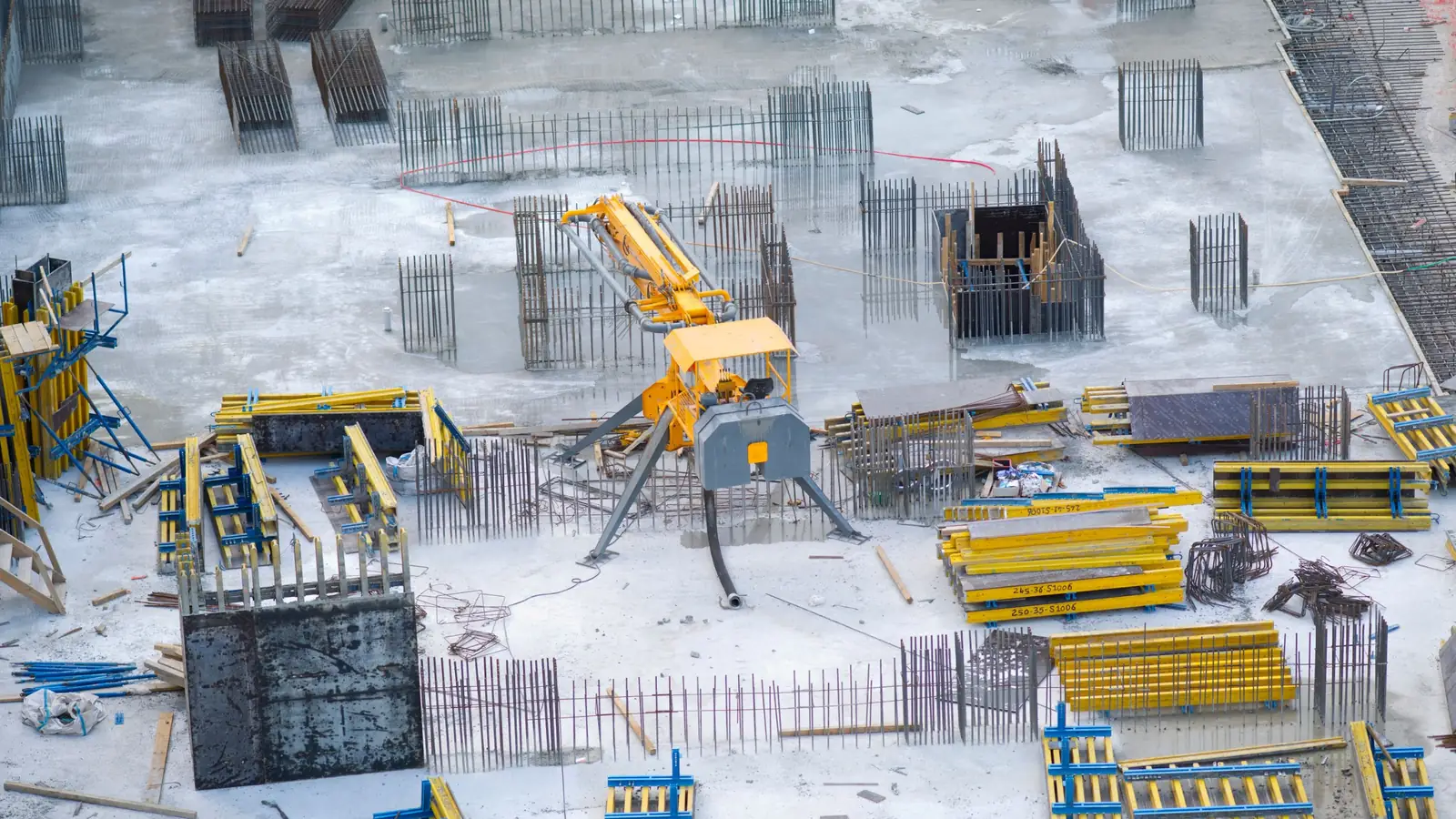
What is the cheapest way to buy construction materials without lowering quality?
Buy to a measured quantity, not a guess. To save money on construction materials, take off exact quantities by unit of measure, apply a waste factor you can defend, and buy bulk only where freight and storage costs stay below the savings. Then track price movement by material family before you release the purchase order.
How to Save Money on Construction Materials: Where the Money Actually Leaks
Material savings are a chain, not a negotiation trick. It starts with the takeoff quantity in the right unit of measure, passes through the delivered price on the purchase order, and ends with what actually gets installed and what gets thrown away. A break anywhere in that chain shows up as a cost you cannot explain later.
The four levers are quantity, price, waste, and timing. Quantity comes from the drawings and a documented measurement rule. Price comes from a vendor quote you can compare line by line. Waste comes from a stated waste factor per material. Timing comes from knowing which commodities are moving and locking a price before they move again. That is the practical answer to how to reduce material costs in construction: measure first, then buy, and you save money on construction materials without touching the specification.
The chart below rebases the BLS Producer Price Index series for lumber and wood products, ready-mix concrete, steel mill products, and copper wire and cable to 100, so you can see how far each one has traveled. The series have not moved together. Lumber and ready-mix have drifted modestly, while steel mill products and copper wire and cable have climbed sharply over the same window. A bid that priced copper at last year's level is a bid with a hole in it.
Material price tracking construction work means recording the index date behind every quote. When a supplier's number is three weeks old on a commodity that is climbing, you are not comparing prices, you are comparing dates. Ask each vendor for the quote date and the validity period, then put both on the bid leveling sheet next to the unit price.
Board feet, linear feet, and cubic yards are where gut-feel buying fails. A framing package quoted in board feet and a takeoff measured in linear feet cannot be reconciled without a conversion rule, and that gap is where overordering hides. A line-item measured quantity schedule gives every purchase order a number it can be traced back to, which is the only way to audit a savings claim after the job closes. Teams that do this consistently save money on construction materials on the quantity line alone, before any vendor conversation begins.
Material price movement, Oct 2023 to Sep 2026
The four cost levers: quantity, price, waste, timing
Quantity is the only lever fully under your control before a single call goes out. Price is shared with the market and the vendor. Waste is a field and detailing problem. Timing is a contract problem, and it is the one most teams ignore until a commodity spikes.
Set a target for each lever on the bid form: a net quantity per CSI MasterFormat division, a delivered unit price with freight and tax broken out, a stated waste percentage, and a price validity date. Four numbers per line item turn a lump-sum quote into something an estimator can actually challenge. Without them, a low bid and a high bid look identical on the summary page.
Start With an Accurate Quantity Takeoff, Not a Supplier Quote
A supplier quote is an answer to a question the supplier chose. It reflects a round number, a stock length, or a minimum order quantity, not the quantity on your drawings. When that quote becomes the budget, every downstream decision inherits the supplier's rounding. That is the first of the construction material procurement mistakes that quietly inflate a job.
A quantity survey starts from the drawings and a stated measurement rule: net area for square footage, net volume for concrete, developed length plus lap for rebar. The waste factor is applied afterward as a separate, visible line. That separation matters, because it lets you argue about the waste percentage without re-measuring the building.
The calculator below takes slab length, width, thickness, and a waste percentage and returns area, cubic feet, net cubic yards, and the order quantity. Change the waste input from 5% to 10% on a 40-foot by 30-foot slab at 6 inches thick and the order quantity moves from about 23.3 cubic yards to about 24.4 cubic yards. At a delivered ready-mix price, that is real money for a bucket of concrete nobody placed.
Avoid overordering construction materials by tying every order to a line in the takeoff and a submittal that confirms the spec. The submittal is where the actual product, unit, and packaging get fixed. If the submittal says the product ships in 80-pound bags and your takeoff is in cubic yards, someone has to do that conversion before the purchase order goes out, not after the pallet arrives. A locked takeoff is also the only honest starting point if you intend to save money on construction materials, because every later decision is measured against those net quantities.
Slab quantity takeoff
- Area
- 2,400 sq ft
- Volume
- 800 cu ft
- Net concrete
- 29.63 cu yd
- Order quantity
- 31.11 cu yd
Formula: length × width × (thickness ÷ 12) ÷ 27 = cubic yards. Thickened edges, footings and pump waste are taken off separately.
Why supplier quotes anchor you to the wrong quantity
Anchoring is not a pricing problem, it is a sequencing problem. Once a vendor number is in the budget, the takeoff gets adjusted to match it rather than the other way around. The fix is procedural: complete the takeoff and lock the net quantities before any vendor call, then send the same quantity sheet to every bidder.
That single change makes bids comparable. Three vendors quoting the same takeoff quantities can be leveled on price, freight, and lead time. Three vendors quoting their own round numbers cannot be compared at all, and the lowest number is often just the loosest measurement. It is also the mechanism that lets you save money on construction materials without shaving the spec, since the savings come from ordering the measured quantity rather than the supplier's rounded one.
Waste factors by material type
Waste is material-specific, and a single blanket percentage is a guess dressed as a rule. Framing lumber waste depends on cutting sheet optimization and stock lengths. Rebar waste depends on cutting sheet optimization rebar patterns and lap splice locations. Concrete waste is mostly spillage and over-excavation, not cutting loss.
State the waste factor per line item, in the unit the material is bought in, and label it as typical rather than universal. A typical range for framing lumber runs higher than for ready-mix, because offcuts and defects are unavoidable in stick framing. The estimator's job is to justify the number, not to pick the highest one.
6 Mistakes During Material Acquisition and How to Avoid Them
Acquisition is where a good takeoff meets a bad purchase order. The six failures below account for most of the gap between a bid-ready quantity and the material cost that lands on the job cost report. Each fix is tied to a number you can check.
Mistake 1: buying from a quote instead of a takeoff. Fix: lock net quantities first, then send the identical quantity sheet to every bidder. Mistake 2: ignoring freight, tax, and delivery minimums. Fix: require a delivered price with freight, sales tax treatment, and any delivery minimum broken out as separate lines. A vendor quote that hides freight is not cheaper, it is incomplete.
Mistake 3: no unit or spec check on submittals. Fix: compare the submittal unit and product to the takeoff unit and spec before release. A substitution from a specified product to an alternate can save money or lose it, and you cannot tell which without the submittal on the table. Mistake 4: single-source buying on a commodity. Fix: get at least two vendor quotes on any line where the index has moved, and record the quote date on both.
Mistake 5: no escalation clause on a long-lead package. Fix: write a construction material price escalation clause that names the index, the base date, and the sharing formula. Mistake 6: unlogged change orders and field purchases. Fix: every field purchase gets a purchase order number and a line in the log, or it does not get paid.
The waste side deserves its own habit. Reduce construction waste from overordering by reconciling the delivered quantity against the installed quantity at closeout, in the same unit of measure. If the delivered square footage of drywall exceeds the installed square footage plus the stated waste factor, the difference is a number you can fix on the next job.
Mistake 1: buying from a quote instead of a takeoff
The quote arrives first because it is easier to get than a takeoff. Reverse the order: measure, then quote. Send the vendor a quantity sheet with units and waste shown separately, and ask for a price against those quantities. The bid leveling sheet then compares like with like, and a scope gap shows up as a missing line rather than a suspiciously low total.
Mistake 2: ignoring freight, tax, and delivery minimums
Freight on heavy materials is not a rounding error, and a delivery minimum can make a small order cost more per unit than a large one. Ask for the delivered price, the freight line, and the tax treatment in writing. If a project qualifies for a sales tax exemption, confirm the certificate with the vendor before the first invoice, not after.
Put all three on the purchase order template as required fields. A quote missing any of them goes back to the vendor, which keeps the comparison honest across bidders.
Cut Waste and Rework: The Savings Nobody Quotes You
Waste is a line item you can measure, and one of the few places where you can save money on construction materials without touching specification or quality. Framing lumber is the clearest case. A wall layout that produces 14-inch offcuts from 16-foot plates wastes the same board that a layout built around 8-, 10-, 12- and 16-foot stock would use. At $0.95 per linear foot, 400 linear feet of avoidable offcut is $380 on one house — before the dumpster, the haul, and the labor to carry it out.
Concrete is the other large leak. Ready-mix is ordered in cubic yards and billed on the delivered quantity, so a 0.5-yard overage on a 40-yard pour at $165 per yard costs $82.50, and a short pour costs far more in a cold joint and a second truck with a minimum charge. Order to the calculated volume plus a stated waste allowance, and reconcile the tickets against the pour record before the crew leaves the site.
Rebar is where cutting sheet optimization rebar pays fastest. A cutting sheet that nests bar lengths against 20-, 30- and 40-foot stock, accounts for rebar lap splice lengths, and assigns every offcut to a scheduled use can cut scrap rate from a typical 8–10% to 3–5% on a mid-size slab package. The saving is real, but only if the bar list and the placing drawings agree.
| Line item | Unit of measure | Quantity ordered | Waste allowance | Cost at unit price |
|---|---|---|---|---|
| 2x10 floor joists, 16 ft | linear feet | 1,850 | 5% | $1,758 |
| 2x10 rim board, 16 ft | linear feet | 240 | 5% | $228 |
| 3/4 in. subfloor, 4x8 sheets | square feet | 2,240 | 12% | $1,568 |
| Joist hangers | each | 96 | 2% | $144 |
| Construction adhesive | tube | 48 | 0% | $288 |
Ordering to cut plans and standard lengths
Build the cutting list before the purchase order. For framing, list each member by size, length, and quantity, then group by stock length so the supplier ships what the layout consumes. For rebar, run the bar list through a nesting routine and check that lap splices land where the detail shows them. For sheet goods, lay out the cuts on a per-sheet diagram and record the offcut sizes you can reuse. The same discipline belongs in a measured quantity survey that carries standard lengths as an input rather than an afterthought.
Staging, security, and damage losses
Material damaged in the yard is bought twice. Gypsum board stacked flat on grade wicks moisture and is rejected at hanging; lumber left uncovered checks and cups; copper wire and fixtures disappear from unsecured sites. Stage in the sequence of installation, keep board on dunnage and under cover, and lock high-value material in a container. Assign one person to receive and count deliveries against the bill of materials, because a shortage found at installation becomes a change order and a schedule hit.
Return policies and restocking fees
Read the return terms before you order, not after. Common terms are full credit on unopened stock within 30 days, a restocking fee of 15–25% on special order, and no return on cut or fabricated material. That means the overage on a cut-to-length item is not recoverable at any price. Price the expected return into the order: if you routinely return 5% of a $60,000 package at a 20% restocking fee, that is $60,000 × 0.05 × 0.20 = $600 of pure loss, and it is avoidable with a tighter takeoff.
Track Material Costs With Traceable Numbers
A saving you cannot prove is a story. Keep one log per project with a row for every material line: the takeoff quantity, the unit of measure, the vendor quote, the purchase order number, the delivery date, and the invoice amount. When the job closes, the variance between estimated and actual material cost is either explained by a documented change or it is a takeoff error you can fix on the next bid. That feedback loop is worth more than any single discount.
Traceability starts with the quantity. A framing line of 4,200 linear feet of 2x6 studs at 16 inches on center should be reproducible from the wall schedule, the plate count, and the opening deductions. A rebar line should show the bar size, the lap splice length used, and the stock length the cutting sheet assumed. If a number cannot be rebuilt from the drawings and a stated rule, it does not belong in the bid.
Scrap allowance framing lumber deserves its own line rather than a hidden markup. Carrying 5% as a visible allowance lets you compare it against actual offcuts at closeout and adjust the next estimate. The same applies to bulk buying construction materials: record the quantity bought, the quantity installed, and the quantity returned, and the true cost per installed unit becomes obvious.
To start, request a free quote and attach your drawings.
| Line item | Takeoff quantity | Ordered quantity | Invoice amount | Variance vs. estimate |
|---|---|---|---|---|
| 2x6 studs, 92-5/8 in. | 1,180 each | 1,240 each | $6,944 | +$336 |
| Rebar, #5, 20 ft | 3,600 linear feet | 3,700 linear feet | $4,625 | +$125 |
| Ready-mix, 4,000 psi | 86 cubic yards | 88 cubic yards | $14,520 | +$330 |
| Copper wire, 12 AWG | 4,200 linear feet | 4,200 linear feet | $1,890 | −$210 |
| Rigid insulation, 2 in. | 3,200 square feet | 3,360 square feet | $5,376 | +$268 |
Unit price, quantity, and delivery log
Log the unit price exactly as invoiced, including freight, and convert every line to the unit you estimate in. A vendor quoting per piece and a takeoff in linear feet will not reconcile until you convert, and that conversion is where errors hide. Record partial deliveries against the purchase order so a short shipment is caught at receipt. A structured quantity takeoff excel template keeps the takeoff, the order, and the invoice on the same line items.
Comparing actual vs. estimated material cost
Compare at the line level, not the package total, because a package total can net a $4,000 overrun on steel against a $4,000 underrun on concrete and tell you nothing. Flag any line more than 10% off estimate and write one sentence of cause: quantity error, price movement, or scope change. Three jobs of that data will show which divisions your takeoff consistently misses. Our material takeoff services produce line-item quantities you can drop straight into that comparison.
When to involve value engineering
Call for value engineering when the variance is structural, not when a single line drifts. If steel and copper movements have pushed the package past the budget by a margin no quantity fix will close, an alternative system — different bar size, different member spacing, different sheathing — is the lever. Bring it in before buy-out, while the drawings can still change without a change order. A professional value engineering estimating review prices the alternatives against the same takeoff so the comparison is apples to apples.
Frequently Asked Questions
How can I save money on construction materials without lowering quality?
You save money on construction materials by ordering the right quantity the first time and buying against a specification, not a price. An accurate takeoff with a stated waste factor per CSI division removes the overage that hides in rounded orders. Then compare vendor quotes on identical units and scope so the cheapest number is actually the cheapest material.
What are the most common mistakes when buying construction materials?
The recurring ones are ordering from a supplier quote instead of a measured quantity, mixing units between vendors, and letting a purchase order ride without a submittal review. Others are ignoring freight and sales tax when comparing, ordering without a cutting list, and accepting an escalation clause with no cap. Each mistake shows up later as a change order or scrap.
Is it cheaper to buy construction materials in bulk?
Sometimes, and only when the quantity is measured. Bulk pricing saves money when the unit price break exceeds the carrying cost of the surplus, which includes storage, handling, damage and the cash tied up. For lumber and ready-mix, surplus that sits or sets is a total loss. Compare the delivered bulk price against the phased order before committing.
How much waste should I add to a material order?
Waste factors are line-item decisions, not a blanket percentage. Typical allowances run a few percent on concrete and masonry, more on framing lumber and sheet goods where cuts and defects bite, and higher still on tile and specialty finishes laid out on a diagonal. Base each one on the cutting list and the actual piece lengths.
Should I lock in material prices early or wait?
Lock in when the quantity is firm and the specification is settled. Locking a price before the takeoff is complete fixes a number you may not need. For volatile divisions, ask for a quote with a validity period and an escalation clause with a stated cap and index, so a price move is shared rather than absorbed in a change order.
How do I compare material quotes when units and specs differ?
Convert every quote to the same unit of measure and the same specification before comparing. A rebar quote in tons, a lumber quote in board feet and a concrete quote in cubic yards are not comparable until freight, tax, lead time and included accessories are added to each. Build a bid leveling sheet with one row per line item and one column per vendor.
Can you use my estimate template?
Send the template with the drawings and we confirm whether the estimate can be delivered in it. We return an Excel workbook and a PDF summary with marked-up drawing pages, so your template is used where the structure allows and the differences are noted. The format is agreed before plan review starts.
Do you sign NDAs?
Clients can request an NDA before sending drawings, and the terms are agreed before plan review begins. Send the request first and we confirm the wording. Drawings and specifications are then handled under those terms, and the deliverable stays limited to the estimate, marked-up pages and summary you ordered.