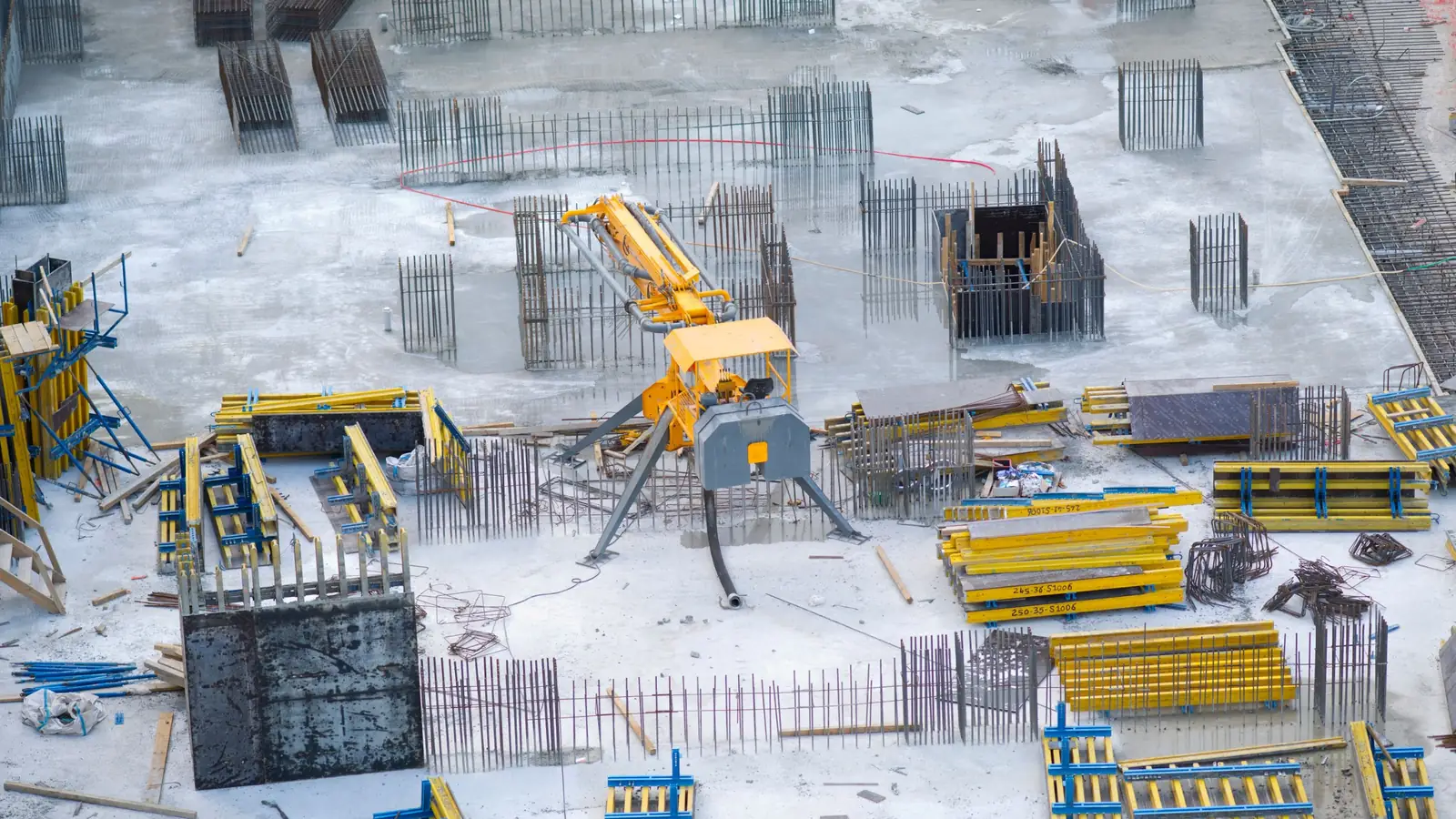
How do you reduce construction waste on site?
Construction waste reduction works by measuring first: take off quantities by CSI MasterFormat division, set a stated waste factor per material, separate debris at the source, and reconcile purchase orders against as-built quantities. Each step produces a number you can compare, so over-orders and offcut losses become visible and correctable.
Why Construction Waste Reduction Starts With Measurable Numbers
A wasted 2x10 offcut is not an abstraction. It has a unit (linear feet), a purchase price per foot taken from the framing purchase order, and a disposal cost per cubic yard of roll-off capacity. Construction waste reduction begins when each of those three numbers is written on the same line of the same sheet.
That is why a construction waste management plan built on estimates of "about 10 percent" rarely changes behavior on site. A waste minimization construction site needs a denominator: the quantity the drawings actually require. Measured against takeoff quantities, a 14 percent framing overage on a 2,400-square-foot floor is a specific number of studs, plates and sheets, and someone owns it.
The chart below shows how the same physical waste produces very different dollar exposure depending on the material, because lumber, ready-mix concrete and steel mill products have moved on separate price paths. Copper wire and cable has moved hardest of all, which is why a short length of feeder left in a dumpster is not the same loss as a short length of form board.
Disposal is the second half of the ledger. Landfill tipping fees, haul charges and container rental are billed by weight or volume, so the waste diversion rate you report and the construction waste disposal cost you pay are two views of the same tonnage. Concrete washout is a useful test case: it is a small volume with a large compliance and handling cost, and it never appears in a material takeoff unless someone adds it deliberately. That omission is where construction waste reduction quietly stalls, because a cost nobody measured is a cost nobody manages.
Slab quantity takeoff
- Area
- 2,400 sq ft
- Volume
- 800 cu ft
- Net concrete
- 29.63 cu yd
- Order quantity
- 31.11 cu yd
Formula: length × width × (thickness ÷ 12) ÷ 27 = cubic yards. Thickened edges, footings and pump waste are taken off separately.
The real cost of off-cut, over-order, and damage waste
Three failure modes dominate framing and finishes. Off-cut waste comes from cutting to a dimension that does not divide into stock lengths; a wall laid out at 9 feet 4 inches from 8-foot or 16-foot stock leaves more drop than one laid out at 8 or 16. Over-order waste is the extra unit or two added "to be safe" and never returned, and it is the easiest to eliminate because it is decided at the purchase order, not in the field.
Damage waste is the most expensive per unit because the material has already been paid for, delivered, handled and then discarded. Drywall stored flat on a wet slab, OSB sheathing stacked without dunnage, and dimensional lumber left uncovered through a rain cycle all convert purchased stock into disposal tonnage. Each of these is a handling decision, not a purchasing one, and each can be assigned to a named person in the waste management plan.
Waste factors by material: what typical percentages look like
Typical waste factors vary by material and by the crew doing the work. Framing lumber commonly carries 5 to 10 percent, drywall 10 to 15 percent, and floor and wall tile 10 to 15 percent once breakage and layout cuts are counted; concrete is usually ordered with a small overrun of 3 to 5 percent because short loads cost more than the surplus. Treat these as planning ranges, not benchmarks, and replace them with your own field-verified numbers after two or three projects.
The calculator below takes slab length, width, thickness and a waste percentage and returns the area, the net volume in cubic feet, the net volume in cubic yards and the order quantity in cubic yards. Run the slab both ways, at zero waste and at your planned allowance, and the difference is the concrete you are budgeting to lose. That difference is the number to attack before the first truck is dispatched.
How a Material Takeoff Baseline Makes Construction Waste Reduction Possible
You cannot reduce a quantity you have not counted. A line-item takeoff gives every material a unit of measure, a measured quantity from the drawings, and a waste percentage applied to that quantity. The result is a target the superintendent can compare against deliveries, and a variance that shows up weekly rather than at closeout.
This is the practical answer to how to reduce construction waste on site: publish the target. If the takeoff says 312 sheets of 5/8-inch drywall for the unit, the field knows that a 330-sheet delivery contains 18 sheets of planned waste and that anything beyond it requires a reason. A takeoff produced by our material takeoff services team arrives in that form, line by line, with the measurement rule and waste factor shown next to each quantity.
Baselines also make disposal visible. When each line item carries a waste quantity, the expected cubic yards of debris can be estimated before the first dumpster is ordered, and the construction waste disposal cost can be compared against the material value being thrown away. A rebar offcut pile is the clearest example: the tonnage is small relative to the concrete package, but at current steel mill product prices the recoverable value per ton is not trivial, and scrap credit is only collectible if someone tracked the bar in the first place.
Ordering to the takeoff quantity instead of the round number
Round numbers are where waste hides. A takeoff that returns 47.3 squares of shingles becomes a 50-square order, and the 2.7 squares either go on the roof as extra laps or go in the roll-off container. Order to the calculated quantity plus the stated waste factor, then let the supplier's packaging increment be a documented, visible addition rather than an unrecorded one.
The same rule applies to concrete, where the order quantity is computed in cubic yards and the truck increment is fixed. If the calculated order is 41.2 cubic yards and trucks carry 10, the conversation about the 1.2-yard surplus belongs in the pre-pour meeting, not at the chute. A measured quantity takeoff that shows both the net quantity and the order quantity makes that conversation short.
Flagging high-waste line items before procurement
Sort the takeoff by waste dollars, not by waste percentage. A 15 percent allowance on a low-cost commodity may be smaller in dollars than a 4 percent allowance on a high-value item, and the landfill tipping fee is charged on volume or weight regardless of what the material cost. Flagging the top ten line items by waste value tells the project manager where a single conversation with a supplier or a crew leader pays for itself.
Those flags belong on the same sheet as the purchase order quantities so the buyer sees them before the order is released. If your team works in spreadsheets, a takeoff workbook template with a waste column and a unit-price column will produce this ranking automatically.
Site-Level Efforts That Cut Waste Before Materials Arrive
Most waste is designed, specified or ordered before a single board is cut. Pre-construction decisions set the floor on what the field can achieve, and no amount of jobsite sorting recovers a layout that generates 30 percent drop from stock lengths.
Dimensional coordination is the first lever. Lay out framing on 16- or 24-inch centers from a wall line that divides evenly into 8-foot or 16-foot stock, and the cut list shortens. Set a floor-to-floor height that matches sheathing and drywall sheet widths, and horizontal joints disappear along with the scrap they create. These are drawing-level decisions, and they cost nothing to make early.
Procurement timing is the second lever. Material delivered three weeks before it is needed sits on the ground through weather cycles, gets moved twice, and absorbs damage that becomes disposal tonnage. Just-in-time delivery, sequenced by floor or by phase, trades a small delivery premium for a measurable reduction in damaged stock.
Storage is the third. Covered, off-ground, dunnaged storage for dimensional lumber and OSB sheathing prevents the edge swelling and warp that turn usable stock into cull. Assign the storage location on the site plan and inspect it, because an uncovered stack is a decision someone made, not an accident.
Design and value engineering decisions that reduce off-cuts
Value engineering is often framed as a cost exercise, but the quantity effect is what matters for construction waste reduction. Swapping a 9-foot wall height for 8 feet, or a 10-foot ceiling for one that takes 12-foot board without a joint, changes the cut list and the drop pile at the same time. Run those options through value engineering estimating so the material savings and the labor effect are priced together rather than argued separately.
Deconstruction versus demolition salvaged materials deserve the same treatment. A renovation that removes casework, doors and dimensional lumber intact can sell or reuse those items, while a demolition scope converts them to mixed debris at the landfill tipping fee. The decision belongs in the pre-construction estimate, because the labor to remove intact is real and must be compared against the disposal and salvage value it avoids.
Procurement: right quantity, right delivery timing, right packaging
Ask suppliers what packaging increment they ship and whether broken pallets, banding and stretch wrap can be taken back. Returnable packaging and supplier take-back of pallets remove volume from the roll-off container without changing a single cut. On fasteners, sealants and adhesives, order the container size the crew will actually finish, since partial pails and tubes are a common disposal line item.
Delivery timing belongs in the subcontract. If the drywall subcontractor is responsible for the sheets from delivery to hang, the incentive to store them properly is written into the agreement. The same clause structure supports back charges when delivered material is damaged by another trade, which converts a disposal cost into a recoverable one.
Storage and handling plans that prevent damage and weathering
A storage plan is a one-page drawing: where each material class sits, what it sits on, and what covers it. Lumber and OSB sheathing go on dunnage with a waterproof cover and airflow underneath. Drywall stays flat, dry and off the slab. Cement-based products and bagged goods stay off the ground and out of standing water, and rebar is stored clear of the concrete washout area so it does not need cleaning before placement.
Handling equipment matters as much as location. Fork extensions that dent bundles, or a telehandler picking a pallet by the banding, create damage that shows up as construction material waste percentage in the closeout report. Brief the operators on the storage plan the same week the material arrives, and tie the plan back to the broader construction waste reduction strategies in the site plan so handling rules and disposal rules are read together.
Segregation, Reuse, and Recycling: Field Practices That Work
Every waste stream you separate on site has a cost line behind it: the dumpster rental, the haul charge, the tipping fee, and the labor to sort. Site waste segregation best practices start with matching the container to the material and the vendor's acceptance rules. A clean wood box that accepts only untreated dimensional lumber and pallets will be rejected if a crew throws in painted trim or plywood with adhesive. Confirm the hauler's contamination threshold in writing before the first roll-off container lands, because a rejected load is billed as disposal, not recycling.
Setting up labeled waste streams and haul-off schedules
Label each container with the material it accepts and the CSI MasterFormat Division 02 section it belongs to, such as 02 41 13 for selective wood framing demolition. Source separation works when the haul-off schedule matches the production rate: a drywall scrap box fills faster during board hanging than during framing. Post the pickup calendar next to the container and assign one person to call for swaps. For a traceable baseline of quantities by material, a measured quantity survey gives you the installed quantities to compare against hauls.
Reuse of off-cuts, formwork, and surplus materials
Form lumber, dimensional lumber off-cuts, and surplus OSB sheathing can be reused if they are stored dry and sorted by length. Set a cut list at the saw station so carpenters pull from the shortest usable piece first. Salvage value is real but only when the material is protected: stack off-cuts on dunnage, band them, and mark the length. Any over-order allowance you carry in the purchase order should be reviewed against the reuse pile before the next requisition goes out.
Tracking diversion rates with tickets and weights
A diversion rate is only defensible when every load has a weight ticket or bill of lading. Record the container number, material type, gross and tare weights, and the receiving facility. For comingled recycling, the hauler's sort report gives you the recovered tonnage; for source-separated loads, the scale ticket is the primary document. Tie each ticket back to the cost code so the disposal cost per phase is visible. If you need help building the installed-quantity baseline those tickets are compared against, send your plans and we will scope the takeoff.
What Waste Percentages Should You Carry in the Estimate?
A waste factor is an estimate line, not a hidden markup. Carry it as a separate quantity with its own unit of measure and measurement rule, so the purchaser can see why 1,050 square feet of drywall were ordered for 1,000 square feet of wall. Construction waste reduction starts with knowing which line the waste belongs to. Blanket percentages hide the difference between a 10% tile allowance and a 3% concrete allowance. The calculator below returns a low and high contingency from a base estimate and an AACE estimate class, which helps you set the overall budget range before material-specific factors are applied.
Contingency range by estimate class
- Low contingency
- $150,000 (10%)
- High contingency
- $300,000 (20%)
- Budget range
- $1,650,000 – $1,800,000
Typical planning ranges that follow the AACE estimate-class idea: less design, more contingency. Set the final figure from a risk review of your own project.
Material-specific waste factors vs a blanket percentage
Typical waste factors vary by material and installation method. Tile often runs 10% to 15% because of cuts and breakage; drywall 10% to 12% for standard layouts; dimensional lumber 5% to 10% depending on cut optimization; ready-mix concrete 3% to 5% for over-pour and pump loss; and structural steel 2% to 3% for fabrication scrap. A blanket 10% overstates concrete and understates tile. For a line-item view of installed quantities before waste is applied, our assembly-level quantity takeoff lists them by assembly.
When to escalate waste factors for complex geometry or phased work
Escalate the factor when the layout has many angles, small rooms, or repeated penetrations, and when phased work forces partial orders and remobilization. Comingled recycling does not change the material waste factor, but it changes the disposal cost line. Review high-value lines such as copper wire and steel with value engineering estimates before locking the factor, because a small percentage of a volatile price is still real money. Those two levers, a defensible waste factor and a reviewed unit price, carry most of the construction waste reduction available at the estimate stage.
Measuring Construction Waste Reduction: KPIs the Site Team Can Own
Reducing material waste in construction requires numbers the site team can collect without a separate accounting exercise. Pick three or four metrics that tie purchases and haul-offs back to the takeoff baseline. Each number needs a unit of measure, a measurement rule, and a source document, so a superintendent can defend it in a weekly meeting. Construction and demolition debris tonnage without a ticket is an opinion, not a metric.
Waste per square foot and per installed unit
Calculate waste per square foot of floor area and per installed unit, such as pounds of drywall scrap per 1,000 square feet of board hung. Use the same unit of measure as the takeoff so the comparison is direct. A simple table with the installed quantity, the purchased quantity, and the hauled weight per phase gives you a defensible trend. For a structured starting point, the Excel takeoff workbook layout shows how to keep units and rules visible.
Purchase quantity vs installed quantity variance
Compare the purchase order quantity to the as-built quantity from the takeoff. A variance above the planned waste factor signals either a field measurement error or a change order that was not reflected in the requisition. Record the variance by CSI MasterFormat division so the pattern is visible. This is the same discipline used in a construction estimate, where every quantity traces to a drawing and a rule.
Disposal cost per project phase
Track dumpster rental, haul charges, and landfill tipping fees by phase, not as a single project total. A framing phase with clean wood separation will show a different cost per ton than a finishing phase with comingled debris. Weight tickets and bills of lading are the source documents. When the disposal cost per phase is visible, back charges to subcontractors who contaminate loads become a factual conversation rather than a dispute.
Common Construction Waste Reduction Mistakes and How to Avoid Them
Most waste on a job is not a field problem; it is a paperwork problem that shows up in the roll-off container three weeks later. The three failures below account for a large share of the gap between the waste factor carried in a construction estimate and the tonnage actually hauled off site. Each one has a fix that costs documentation time rather than money.
Start with the purchase order. A PO written as "2,400 sf of 7/16 in. OSB sheathing, 5 percent over" gives the site team a number they can reconcile against a cut list; a PO written as "enough sheathing for the roof" gives them nothing to check. When quantities are traceable to a line-item takeoff, surplus is visible before it becomes debris.
| Item | Quantity | Unit | Basis |
|---|---|---|---|
| Planned sheathing | 2,400 | sf | Takeoff quantity, net of openings |
| Over-order allowance at 10% | 240 | sf | Stated percentage on the PO |
| Returnable, undamaged | 80 | sf | Field verification at closeout |
| Scrap and unusable offcut | 160 | sf | Becomes debris, no credit |
| Estimated debris volume | 1.5 | cubic yard | Loose volume after breakage |
No segregation plan until the dumpster is already mixed
A 10 percent cushion on 2,400 sf of OSB sheathing puts 240 sf on site that nobody planned to install. Two-thirds of a unit may come back as broken corners and offcuts that cannot be returned, and the crew still pays to handle it twice — once on delivery, once into the container.
The fix is an over-order allowance tied to a documented rule: panel goods at a stated percentage for breakage, commodities at zero beyond the cut list. Tie the allowance to the purchase order line so the field verification count at closeout matches the PO. Surplus that is measured and returned is a credit; surplus that is discovered at final clean is construction debris recycling volume you pay to process.
Waste factors copied from another project without adjustment
A 10 percent drywall waste factor is reasonable on a tract of repetitive units and generous on a single-story tenant fit-out with long, clean walls. Copying the factor without checking the framing layout, sheet size, and ceiling height buries money in the estimate and teaches the crew that the number is decorative.
Set the factor from the actual cut list: sheet size against wall height and opening layout. A 12 ft wall with 54 in. sheets leaves a usable drop; a 9 ft wall with 8 ft sheets leaves a strip that usually becomes scrap. Reconcile the carried factor against the weight tickets at closeout and adjust the next project's number. That feedback loop is the practical core of reducing material waste in construction, and it only works when the baseline quantities are traceable.
Frequently Asked Questions
What is a typical construction waste percentage by material?
Typical waste factors vary by material and by how the work is sequenced. Dimensional lumber often runs higher than sheet goods because cut lists are rarely followed exactly; drywall scrap depends on ceiling height and board length; concrete loss concentrates in over-pours and washout. Treat any published percentage as a starting allowance, then replace it with your own field-verified quantities after the first two floors or units are complete.
How do you create a construction waste management plan?
Start with the takeoff: list each CSI MasterFormat Division 02 through 49 line item by quantity and unit of measure, then assign a waste factor and a destination (reuse, recycle, or landfill). Add the site logistics — roll-off container count and placement, source separation stations, subcontractor responsibilities, and haul tickets. Name who verifies weights and who signs the bill of lading. Review the plan at the preconstruction meeting and update it when a change order alters quantities.
What are the most effective construction waste reduction strategies on site?
The highest-return moves are dimensional: order to a cut list, build to module, and keep offcuts in labeled racks for the next area. Source separation at the point of generation beats comingled recycling because it protects material value and avoids contamination downgrades. Prefabrication and panelization shift scrap back to a shop that can reuse it. Field verification of as-built quantities before the final purchase order prevents over-order allowances from becoming disposal cost.
How much does construction waste disposal cost per ton?
Disposal cost is set by the landfill tipping fee in your market, the haul distance, container size, and whether loads are separated or comingled. Roll-off container rental and haul charges are usually billed separately from tonnage, and overweight or contaminated loads carry surcharges. Because rates are local and change, we do not publish a national figure; your hauler's current rate sheet and weight tickets are the reliable source.
Can construction waste reduction lower my bid price?
Yes, when the savings are quantified rather than assumed. A bid that carries a 10% over-order allowance on lumber and drywall is pricing disposal and unrecovered material into the number. If the takeoff establishes real quantities and the site holds to them, the allowance shrinks and the bid reflects it. Document the reduction with purchase orders, weight tickets, and diversion records so the next estimate starts from evidence.
How do you measure waste diversion rate on a construction project?
Diversion rate is the weight of material diverted from landfill (reused, salvaged, or recycled) divided by total waste generated, expressed as a percentage. Use scale-measured tonnage from haul tickets and recycling facility receipts, not container counts. Track it by material stream — wood, drywall, metal, concrete — so a single heavy stream does not mask poor performance elsewhere. Reconcile monthly against the waste management plan.
Do you sign NDAs?
Clients can request a confidentiality agreement before sending drawings, and the terms are agreed before plan review begins. Send the request with your project contact and the scope you want covered, and we will confirm the arrangement before any files are transferred.
Can you use my estimate template?
Send the template along with the plans and specifications, and we will confirm whether the estimate can be delivered in it. The workbook we return normally carries quantities, units, waste factors, and source notes; if your template has those columns, the data maps into it. Format constraints are reviewed at the same time as the scope.