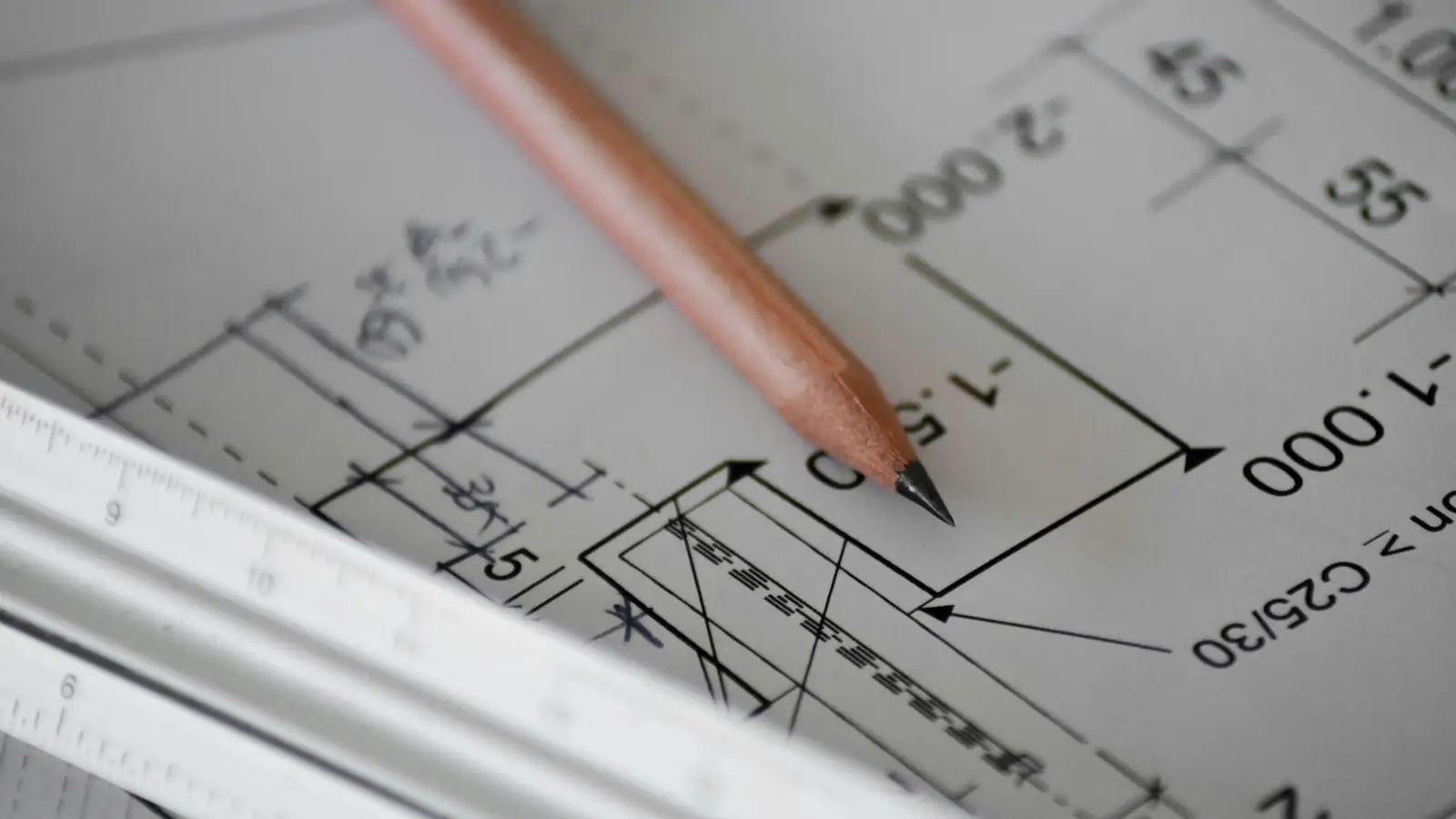
How do you reduce construction cost overruns?
Reduce construction cost overruns by pricing a complete, measured takeoff before bids, setting a cost baseline by CSI MasterFormat division, carrying an explicit contingency, and tracking committed cost against that baseline. Every quantity needs a unit, a measurement rule and a source so scope gaps surface early.
What Causes Construction Cost Overruns?
Most construction cost overruns are decided before ground breaks, in the estimate rather than on the site. A missing Division 03 concrete line item, a quantity measured by count instead of by volume, or a labor rate copied from an old project all survive into the contract and surface later as a variance nobody planned for. The drivers below are the ones we see most often in the takeoff, and each one leaves a paper trail you can check.
Escalation is the driver that hides best. A bid package priced on last year's lumber or copper wire numbers carries a gap the moment the market moves, and the gap lands on whoever signed the lump sum. Track the published producer price indexes for your major commodities between bid and buyout, and price escalation as its own line rather than hoping it away.
Scope gaps and unclear drawings
A scope gap is a work item that appears on the drawings but on no bidder's sheet, or the reverse. Roof drainage shown on the architectural sheets but absent from the plumbing bid, firestopping at Division 05 penetrations omitted from the metals package, or Division 26 electrical devices noted only in a schedule revision. During design development, drawings change faster than the estimate; at construction documents, every addendum and request for information can shift quantities.
We reconcile the estimate against the drawing set sheet by sheet so each line item traces to a detail, a schedule, or a specification section. Where a drawing is silent, the estimator flags it rather than filling the gap with an assumption, because an unflagged assumption is a future change order.
Price escalation and material volatility
Material prices move between the estimate date and the procurement date, and long-lead items carry the most exposure. The Bureau of Labor Statistics producer price indexes show how far apart commodities can drift in a single year; lumber, ready-mix concrete, steel mill products and copper wire and cable do not move together. An estimate that applies one blanket escalation percentage across all divisions misstates risk in both directions.
Price the volatile divisions separately and tie the escalation to the commodity that actually drives them. For copper wire, that means the conductor content; for structural steel, the mill price of the shapes and plates. A construction cost overrun contingency sized without regard to which materials are volatile is a guess wearing a percentage sign.
Change orders and field delays
Change orders accumulate through scope creep, undocumented field direction, and late owner decisions. Each one is small enough to approve on its own, and together they move the schedule of values well past the contract sum. Field delays compound the problem: a crew standing by on a Division 03 pour because the reinforcing steel submittal was never returned is a general conditions cost with no line item to absorb it, which is why the split between general conditions vs general requirements belongs in the estimate from the first draft.
Track every change order against its originating document, whether a sketch, an RFI response, or a meeting minute. For teams building that discipline into the job, our guide on how to reduce construction cost overruns starts with a bid-ready drawing set and a measurement rule written down for every quantity. The companion page on construction cost overrun analysis belongs in the same folder as the estimate, not the postmortem.
How to Reduce Construction Cost Overruns with Traceable Estimating
Construction cost overrun prevention is mostly bookkeeping done early. Every number in a traceable estimate carries four things: a unit of measure, a measurement rule, the arithmetic that produced the extended amount, and a source for the rate. When a reviewer can follow those four steps on any line, an error is found in the estimate rather than in the pay application.
The calculator below turns the estimate class into a contingency range. Enter the base estimate and pick the AACE estimate class from 5 to 1; class 5 is a conceptual estimate with wide uncertainty, and class 1 is a detailed bid-stage number with narrow uncertainty.
Contingency range by estimate class
- Low contingency
- $150,000 (10%)
- High contingency
- $300,000 (20%)
- Budget range
- $1,650,000 – $1,800,000
Typical planning ranges that follow the AACE estimate-class idea: less design, more contingency. Set the final figure from a risk review of your own project.
Unit-rate discipline and measurement rules
Write the measurement rule next to the unit. Concrete in Division 03 is measured by cubic yard of placed volume, not by form area; structural steel in Division 05 by ton of erected members with connections called out separately; electrical raceway in Division 26 by linear foot with fittings and supports as their own lines. A waste factor belongs on the material quantity and must be stated as typical, not implied.
A cost overrun tracking spreadsheet works only if the columns match the estimate: CSI MasterFormat division, line item, unit, quantity, unit price, extended amount, and source. Rates built from the wage table below should name the trade and the hour basis, so a labor rate change is visible rather than buried in a lump sum. Sorting every line into direct vs indirect costs in construction keeps general conditions and field overhead from being absorbed into trade unit prices.
Arithmetic checks and public data sources
Check extensions and subtotals independently of the person who built them. A transposed digit in a quantity times a unit price is the cheapest error to catch and the most expensive to miss. Public data anchors the rate side: BLS wage data for the trade and the producer price index for the commodity, both cited on the line so the rate can be re-verified when the estimate is updated.
Where the design is still moving, a professional value engineering estimating review can trade scope against cost before bid, and professional change order estimating keeps later additions priced on the same basis as the original contract. Both practices depend on the same line-item structure.
Contingency sizing by estimate class
Contingency is not a fixed percentage applied to every project. It is a function of how much design is complete and how much is still unknown. The calculator below returns a low and high contingency and the resulting budget range for the class you select, which makes the uncertainty explicit instead of hiding it in a round number.
Reconcile the budget at each design milestone and carry the unused contingency forward rather than spending it on scope creep. Our guide to contingency in construction explains how owner and contractor contingency differ, and the contingency percentage construction estimate page covers how the number is set for each class.
Illustrative Worked Example: Tracing a Cost Overrun
This example is illustrative and uses round numbers so the arithmetic is easy to follow. It is not a market price for any building type. The inputs are a 10,000 sq ft building, a base hard cost of $150 per sq ft, soft costs at 10% of hard cost, contingency at 5% of hard cost, and escalation at 3% of hard cost. The square-foot budget calculator below reproduces the same steps with your own inputs; it carries no prices of its own.
| Line item | Basis | Rate | Amount |
|---|---|---|---|
| Hard cost | 10,000 sq ft | $150.00/sq ft | $1,500,000 |
| Soft costs | 10% of hard cost | — | $150,000 |
| Contingency | 5% of hard cost | — | $75,000 |
| Escalation | 3% of hard cost | — | $45,000 |
| Budget total | sum of above | — | $1,770,000 |
| All-in cost per sq ft | $1,770,000 / 10,000 sq ft | — | $177.00 |
| Revised hard cost (10% rate error) | 10,000 sq ft | $165.00/sq ft | $1,650,000 |
| Revised budget total | soft 10%, contingency 5%, escalation 3% of revised hard cost | — | $1,947,000 |
Square-foot budget calculator
- Hard cost
- $444,000
- Soft costs
- $53,280
- Contingency
- $49,728
- Escalation
- $21,880
- Budget total
- $568,888
- All-in per sq ft
- $237
Enter your own base rate from a recent bid, cost book or estimator. The default values are placeholders for the math, not market prices.
Assumptions and quantities
The hard cost covers the trade work in the construction documents: Division 03 concrete, Division 05 metals, Division 26 electrical, and the rest of the CSI MasterFormat divisions in the bid package. Soft costs at 10% cover design fees, permits, and owner-side professional services. Contingency at 5% is an allowance for unknowns still present at this design stage, and escalation at 3% covers the gap between estimate date and procurement.
Each of these is a line item with a stated basis, not a padding figure. The most common cost overrun causes in construction begin with one of these percentages being applied to the wrong base, so the base is written down before any multiplication happens.
Unit rates and arithmetic
Hard cost is 10,000 sq ft times $150 per sq ft, which equals $1,500,000. Soft costs are 10% of that, or $150,000. Contingency is 5% of hard cost, or $75,000. Escalation is 3% of hard cost, or $45,000. The budget total is $1,770,000, and the all-in cost per sq ft is $177.00.
Every extended amount traces to a unit and a rule, so a reviewer can re-run the sheet in minutes. That is the whole point of the exercise: the estimate is an argument you can check, not a total you accept.
Overrun calculation and lesson
Now suppose one unit rate was underestimated by 10%. The hard cost becomes $1,650,000, and soft costs, contingency and escalation follow at 10%, 5% and 3% of the new hard cost: $165,000, $82,500 and $49,500. The total becomes $1,947,000, an overrun of $177,000 against the original budget, or 10% of the original total.
The lesson is that a 10% error in one rate compounds through every percentage applied to it. This is why construction cost overruns are usually built into the estimate before ground breaks, and why why construction projects go over budget so often traces back to a rate nobody re-verified. Retainage and pay application schedules do not fix a bad rate; they only spread the damage over the payment cycle.
What Drives the Price of Construction Cost Overruns?
An overrun is not one number; it is the gap between the cost baseline in your bid and the cost you actually carry. Three drivers widen that gap: what materials did to their unit price, what labor hours actually cost once burden and overtime are loaded, and how much schedule pressure you absorbed. Each is measurable, and each belongs in the estimate as a named line rather than a lump sum.
The chart below rebases the BLS Producer Price Index series for lumber and wood products, ready-mix concrete, steel mill products, and copper wire and cable to 100 at the start of the window. Read it as a spread, not a single trend: the four lines do not move together, so a budget that carries one blanket escalation rate will misprice at least one division. Steel mill products and copper wire and cable have moved far more than ready-mix concrete over the last twelve months, which is why a Division 05 metals package and a Division 26 electrical package need separate escalation treatment in the construction documents.
Material price movement, Oct 2023 to Sep 2026
Material price volatility
Escalation is a line item with a stated base date, a stated index, and a stated quantity. If your concrete line reads 400 cubic yards at a quoted unit price, the exposure is 400 times the index movement on that material, not a percentage sprinkled across the whole budget. Ready-mix concrete has been the calmest of the four series in the chart below; steel and copper have been the most volatile. Tie each volatile line to the addendum or quote date it came from so a later price change can be traced to a specific line item instead of argued over.
Labor productivity and burden
The wage table below shows national median hourly wages by trade, and the spread matters: an electrician's median is well above a construction laborer's, so a crew mix shift of a few hundred hours moves real money. Base wage is only part of the cost. Payroll taxes, insurance, fringe, and small-tools allowances are loaded on top as labor burden, and overtime hours carry a premium that also raises the burden rate on those hours. Estimate hours by trade and task, then apply burden as a separate visible percentage rather than folding it into a blended rate.
Schedule compression and overtime
Overtime is the most common hidden overrun because it arrives as a productivity claim, not a line item. A compressed schedule adds premium hours, and extended general conditions add supervisory, temporary facilities, and equipment time for every week the job runs late. Long-lead items drive this: if switchgear or structural steel arrives late, the trades behind it compress, and the compression shows up as overtime and extended general conditions. Carry a schedule-driven allowance for general conditions and state the assumed duration it is based on, then reconcile it against your commercial construction budget planning assumptions before the bid goes out.
Preventing Construction Cost Overruns with Project Cost Control & Reporting
Prevention starts with an estimate structured the way the job will be bought and built. Every line should carry a CSI MasterFormat division and section, a unit of measure, a measured quantity, and the rule used to measure it. When the quantity takeoff is built that way, each subcontractor invoice, purchase order, and field ticket can be coded back to the line that forecast it. That single link is what lets you avoid cost overruns in construction projects instead of explaining them after closeout.
A bid package issued before the final addendum is the classic scope gap. If the estimate was priced from the drawings and the addendum changed a wall assembly or a panel schedule, the line must be revised and the revision dated. When the drawings and the estimate disagree, the request for information answer becomes the controlling measurement rule until a revised drawing supersedes it. Our cost control and reporting service is built on that traceability: line, unit, rule, source.
| Column | What it holds | Source |
|---|---|---|
| Line ID | Division and section code plus a sequence number | Estimate workbook |
| Unit and rule | Unit of measure and the measurement rule applied | Quantity takeoff notes |
| Original budget | Priced quantity times unit price at bid date | Bid-ready estimate |
| Approved changes | Change orders and allowance drawdowns | Change log |
| Committed | Subcontract and purchase order value | Procurement records |
| Actual to date | Invoiced and field-verified cost | Pay applications |
| Forecast to complete | Remaining quantity times current unit cost | Field verification |
| Variance | Revised budget minus actual minus forecast | Computed |
Budget vs. actual tracking
Set up the cost report by division and line, with columns for original budget, approved changes, revised budget, committed cost, actual cost to date, and forecast to complete. Commitments include subcontracts and purchase orders, not just invoices paid, so a signed steel order shows as exposure the day it is signed. Update the forecast to complete from field quantities, not from percent of schedule elapsed. A line that is 40 percent spent at 60 percent complete is a variance you can still act on.
Early warning indicators
Watch four signals: hours per unit running above the estimate, committed cost exceeding the revised budget on a line, change orders accumulating in one division, and RFIs clustering on one drawing set. Each maps to a cause. Hours per unit above plan points to productivity or scope creep; a single division absorbing changes points to a design gap in construction documents. Report the indicator with the line item and the measurement rule attached so the conversation stays on the number.
Reporting cadence
Match the reporting cycle to the pay application cycle so the cost report and the billing reconcile. A monthly report that ties schedule of values lines to estimate lines lets you see earned value against actual cost without a separate reconciliation exercise. Weekly, track only the volatile lines: long-lead procurement, overtime hours, and any division with open changes. Keep the cost baseline frozen and record every change as an approved adjustment so the variance is always measured against a known starting point, and so the contingency balance is drawn down deliberately rather than by default.
Using Value Engineering and Change Order Estimating to Cut Overruns
Value engineering and change order pricing attack the overrun from opposite ends. Value engineering removes cost before the work is bought; change order pricing controls cost after the scope moves. Both depend on the same discipline: a line item, a unit, a quantity, and a stated rule. Without that, a value engineering proposal becomes an opinion and a change order becomes a negotiation. Our value engineering estimating and change order estimating both start from the line structure of the original estimate.
Construction cost overrun analysis is only useful if it separates the two. A division that went over because the scope changed is a different problem from one that went over because the unit price was wrong. Tag every variance to one cause before you act on it.
Value engineering without scope loss
A credible value engineering proposal states what is removed, what replaces it, and what performance or code requirement still has to be met. Swapping a Division 03 concrete mix design for a lower-strength mix is a cost move only if the structural and durability requirements still hold; otherwise it is a scope loss that returns as a change order. Price the alternative with the same takeoff rules as the original so the savings are comparable line to line. Record the accepted and rejected options with their arithmetic.
Change order pricing discipline
Price a change order from the same unit price basis as the contract, then add the marked-up labor, equipment, and general conditions impact separately. Overtime premium, extended supervision, and small-tools cost belong on the change if the change caused them. Where the contract unit price no longer reflects the market, cite the index and the date. Attach the quantity takeoff for the added work so the reviewer can check the multiplication rather than accept the total.
Documentation and audit trail
Every change order needs a paper trail: the request for information that raised it, the drawing revision or addendum that resolved it, the takeoff that measured it, and the approval that authorized it. File the marked-up drawing pages with the priced change so the measurement rule is visible. At closeout, reconcile the as-built drawings to the final cost report and confirm every line has a source document. That audit trail is what makes the next estimate better rather than just defensible.
How Do You Audit an Estimate for Overrun Risk?
An audit is not a re-estimate. It is a check that every line item carries a unit, a measurement rule, an arithmetic trail and a source, so a reviewer can find the one line that will blow the budget before the bid package is issued. Run the audit on the bid-ready set, and run it again after each addendum, because a scope gap introduced at design development rarely announces itself.
Treat the audit as one of your strategies to minimize construction cost overruns: a two-hour review of a 400-line workbook is cheaper than a single missed Division 05 metals item discovered after the steel submittal. The sections below give you the checklist, the error patterns and the review structure.
To start, request a free quote and attach your drawings.
| Attribute | What the auditor verifies | Typical failure if skipped |
|---|---|---|
| Unit of measure | Unit matches the pricing basis (cubic yard, ton, each, square foot) | Quantity extended at the wrong unit, cost off by a conversion factor |
| Measurement rule | Stated inclusion and exclusion boundaries | Double-counted or missing scope between trades |
| Arithmetic | Extension, subtotal and percentage application | Percentages applied to subtotals that already include them |
| Source | Public wage or price series, quote, or stated allowance | Stale pricing carried into the bid package |
| Estimate class | Class matches the design stage and drawing completeness | Conceptual allowances presented as firm numbers |
| Waste factor | Percentage stated per material and applied once | Compounded waste inflating material cost |
| General conditions | Separate section covering supervision, temporary facilities, permits | Hidden soft costs inside trade lines |
Traceability checklist
Require four attributes on every row: quantity, unit of measure, measurement rule and source. The measurement rule states what is counted and what is excluded — for example, structural steel by ton of erected member weight, excluding connection plates counted separately. A row without a rule cannot be checked, only trusted.
Check that the source is public or contractual: a published wage series, a supplier quote with an expiration date, or a stated allowance. Confirm the estimate class matches the design stage, and confirm that general conditions, permits and temporary facilities sit in their own section rather than buried in a trade line. Where the estimate uses a waste factor, verify it is stated as a percentage on a named material and applied once, not compounded through two subtotals. The same discipline that keeps a budget honest also makes a later change order estimate defensible.
Common arithmetic and unit errors
The recurring failures are boring and expensive. A concrete takeoff measured in cubic yards but priced per cubic foot overstates cost by a factor of 27; a wall area taken from floor-to-deck height instead of floor-to-ceiling misses the plenum above. Watch for quantities extended twice, percentages applied to a subtotal that already includes them, and labor hours converted at a burdened rate that already carries the fringes.
Unit mismatch across divisions is the second pattern: Division 03 concrete priced per cubic yard while the reinforcing is priced per ton against a tonnage taken from a bar list that was never updated after the addendum. Mark any line whose quantity cannot be traced to a drawing sheet number or a schedule, and return it to the estimator with a request for information rather than a correction.
Second-opinion review
A second opinion works best when it is narrow. Ask an independent reviewer to price three or four high-value line items from the drawings without seeing the original numbers, then compare. Differences above a set threshold flag either a quantity error or a pricing assumption worth documenting.
Reviewers should also test the estimate against the cost baseline: does the total reconcile to the owner's budget, and is the contingency sized to the remaining design risk? The reviewer signs off on traceability, not on the number itself. If the audit finds systematic gaps, cost control and reporting services carry the same line-item discipline into the monthly cycle.
Frequently Asked Questions
What are the most common causes of construction cost overruns?
Scope gaps between bid packages, unpriced allowances carried too low, and material escalation on long-lead items head the list. Others include design development changes issued after construction documents, field conditions found during verification, and general conditions extended by schedule slippage. Each cause leaves a fingerprint in the estimate: a missing line item, a stale unit price, or a quantity measured from superseded drawings.
How can I reduce construction cost overruns before construction starts?
Build the budget from a quantity takeoff tied to a named drawing set and date, not from square-foot ratios. Price every CSI MasterFormat division line by line, state the measurement rule per unit, and reconcile the total against any earlier conceptual estimate so movement is explained. Confirm long-lead procurement pricing in writing and carry escalation where the schedule reaches past the quote validity.
What is a reasonable contingency to prevent cost overruns?
Contingency should match the estimate class and how much design is unresolved, not a habit percentage. A conceptual estimate at early design carries more than a bid-level estimate built from complete construction documents. Separate design contingency from construction contingency and from owner's reserve, and release each only against a documented change. See our notes on how contingency is set and drawn down.
How do change orders contribute to construction cost overruns?
Change orders add direct labor, material, and markup, and each one also extends general conditions if it moves the schedule. Overruns compound when changes are priced from rates that never appeared in the original schedule of values. Trace every change order to the line item it modifies so the pay application and cost baseline stay aligned.
Can value engineering reduce construction cost overruns without cutting scope?
Yes, when it targets means and methods rather than program. Substituting a different Division 05 framing system, resequencing Division 26 electrical rough-in, or changing a Division 03 concrete mix design can lower cost while the delivered scope stays the same. Each proposal needs its own takeoff and unit price so the saving is measured, not asserted.
How do I trace a construction cost overrun back to the estimate?
Compare actual cost by line item against the original quantity, unit, and unit price. Separate quantity variance from price variance: a concrete overrun from extra cubic yards is a measurement or scope issue, while the same cubic yards at a higher unit price is escalation or a labor rate change. Our worked example on this page shows the arithmetic.
Do you sign NDAs?
Clients can request one before sending drawings, and the terms are agreed before plan review begins. Send the request with your project details so the agreement is in place ahead of any file transfer.
Can you use my estimate template?
Send the template along with the plans and we confirm whether the estimate can be delivered in it. The workbook and PDF summary with marked-up drawing pages are standard; a client template is reviewed against the line item structure before we commit.