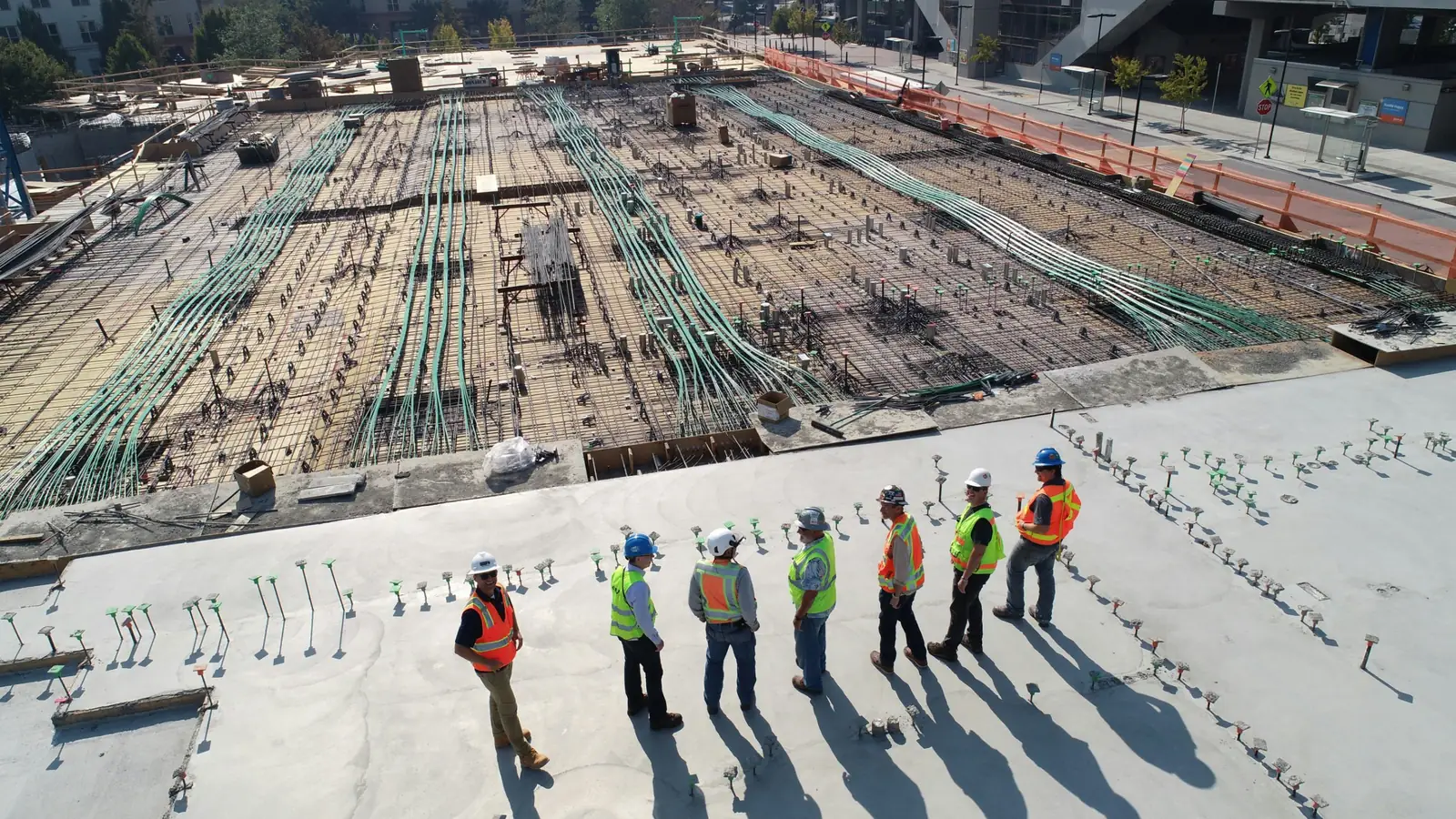
How do you motivate construction workers without raising the bid?
Motivate construction workers by paying the correct classification rate and fringe, scheduling real rest breaks, and keeping foremen consistent across crews. Fund those items in the estimate as labor lines, not as a year-end bonus, so the crew sees the pay on every pay stub.
Why Motivation on a Construction Site Is a Numbers Problem First
Crew morale shows up in the estimate before it shows up in a survey. A 12-person crew at 8 hours a day carries 96 man-hours per shift; shave one hour of productive time off each worker through late starts, phone time and rework, and you have lost 12 man-hours, or 12.5% of the shift, with no change in the payroll. That is the arithmetic an owner sees as schedule variance and a contractor sees as a thinner margin.
Turnover has a unit too. Replacing a journeyman means recruiting hours, onboarding hours, a lower-output ramp period, and the cost of the vacancy carried by the rest of the crew. Track those four items per separation and you have a dollar figure per lost worker rather than a feeling about the labor market. Absenteeism is the same story: each no-show is a man-hour gap that either becomes overtime or pushes a finish date.
A crew that feels heard stays longer, and that is the practical way to motivate construction workers without inventing a program. Contractor staff retention tips that survive a busy season are the boring ones: a foreman who knows the next three weeks of work, a pay stub that matches the hours, and a 15-minute stand-down where questions get answered instead of announced.
| Driver | Unit of measure | Where it is recorded | Estimate line it moves |
|---|---|---|---|
| Turnover and replacement | Dollars per separation | HR or payroll file | Labor burden, general conditions |
| Absenteeism | Man-hours lost per pay period | Daily time cards | Productivity factor, overtime |
| Rework | Hours per activity, by division | Daily report and inspection log | Direct labor, contingency |
| Productivity variance | Earned hours vs. actual hours | Weekly progress update | Schedule variance, labor cost |
| Overtime share | % of hours at 1.5x | Certified payroll or pay stub | Loaded labor rate |
The cost of a disengaged crew
Build a simple ledger with four columns: separation cost, absentee hours, rework hours, and productivity variance against the budgeted man-hour rate. If a 10-person crew loses 3% of its hours to rework on a 2,000-hour job, that is 60 hours; at a loaded rate of $48.00 per hour the exposure is $2,880, before any schedule impact. Show that number at a toolbox talk and the conversation about crew morale changes from opinion to line item.
Rework hours are the most useful of the four because they are traceable to a specific activity and a specific inspection. Tag them by CSI MasterFormat division on the daily report so the pattern is visible: repeated concrete finish repairs in Division 03 read differently from drywall punch in Division 09.
What traceable data tells you about morale
Wage data and price data move the baseline, not the mood. The wage table below shows current BLS OEWS medians by trade, and the Producer Price Index series shows what materials did over the last 12 months. When lumber and steel move sharply, the labor conversation follows, because a crew that watches material prices climb reasonably asks what happened to its own rate.
Keep the comparison honest by pairing each rate with the burden percentage applied to it and the overtime share of hours worked. A crew paid at the median with a 38% burden and 6% of hours at overtime is a different cost structure than the same base wage with a 22% burden, and the workers can feel which one they are in. For the loading side of that comparison, see our manpower loading and crew-hour build-up.
How to Motivate Construction Workers With Pay You Can Defend Line by Line
Pay is the first motivation lever because it is the one workers can verify. A pay stub that reconciles to the time card, the overtime multiplier, and the fringe benefit line does more for keeping good relations with staff as a contractor than any speech. When the arithmetic is visible, disputes about construction worker pay and benefits shrink to the few cases that genuinely need review.
Build the rate in layers. Start with the base wage, add the burden percentage for payroll taxes, insurance, and fringe, then split hours into straight time and overtime. A worker on a 50-hour week has 40 hours at the base rate and 10 hours at 1.5 times the base; the blended hourly rate is what the job actually costs, and it is the number that belongs in the construction estimate. The calculator below takes base wage, burden %, overtime share, crew size and hours and returns the loaded rate, the blended rate with overtime, labor hours and crew labor cost.
A rest break is part of the same conversation, and it is one of the few ways to motivate construction workers that costs nothing to adopt. Federal law does not require rest breaks, but the FLSA does require that breaks of roughly 5 to 20 minutes be counted as paid hours, and many state labor departments set their own meal period and rest break rules. Confirm the edition that applies to your project with the state labor department before you write the policy. A crew that loses break time to a schedule push notices, and heat illness prevention on a summer pour is exactly where a 10-minute hydration break pays for itself in retained apprentices.
Loaded labor rate calculator
- Loaded rate
- $31/hr
- Blended with overtime
- $32/hr
- Labor hours
- 320
- Crew labor cost
- $10,279
Burden covers payroll taxes, workers’ compensation, insurance and benefits; it varies by state, trade and company. Overtime is priced at time and a half.
Base wage, burden, and overtime share
Worked example, illustrative: a carpenter at a $29.12 base wage with a 38% burden carries a straight-time loaded rate of $29.12 × 1.38 = $40.19 per hour. With 10 of 50 weekly hours at overtime, the blended rate is (40 × $29.12 + 10 × $29.12 × 1.5) ÷ 50 = ($1,164.80 + $436.80) ÷ 50 = $32.03 per hour before burden, or $32.03 × 1.38 = $44.20 loaded. A 6-person crew at 50 hours each runs 300 hours and $13,260 in loaded labor for the week.
Those are the inputs a worker can check against a pay stub. If the stub shows a different overtime share or a missing fringe line, the conversation is about a number, not about trust. Our trade-by-trade labor rate build follows the same layering, so the estimate and the payroll speak the same language.
Showing crews how their rate is built
Post the build, not just the total. A one-page sheet per trade listing base wage, burden components, overtime rule and fringe benefit value answers most questions before they become grievances. On Davis-Bacon work, the wage determination and the certified payroll are public documents; a foreman who can walk a new hire through the determination removes the suspicion that rates are arbitrary.
Review the sheet at each pay period change, not once a year. Material prices move faster than wages, and the Producer Price Index series shown in the chart below is the reason a budget that was tight in spring can be comfortable by fall. To see how those rate layers roll into a full project budget, read our guide to assembling a budget estimate.
Keeping Good Relations With Your Staff as a Contractor
Employee relations in construction is mostly policy applied evenly. Write the rules once, in plain language: shift start and stop times, the meal period, rest breaks, call-out procedure, overtime approval, and who to talk to when something is wrong. A helper and a foreman should be able to read the same page and reach the same conclusion about a 7:00 a.m. start.
Know the rest break law that applies before you write it down. The right to a rest break in construction varies by state; some states mandate a 30-minute meal period after a set number of hours, others leave it to the employer, and federal FLSA rules govern whether short breaks are paid. Confirm the current rule with the state labor department, then put the answer in the handbook and on the site board so the foreman is not improvising at 11:45.
Incentives work when they are tied to something the crew controls. A completion bonus for a defined scope, a safety milestone tied to zero recordables, or a paid day off after a clean OSHA inspection are all measurable. A bonus tied to profit the crew cannot see reads as arbitrary and does the opposite of its purpose. The practices below are how you motivate construction workers without promising anything the schedule cannot deliver.
| Practice | Document | Frequency | Risk reduced |
|---|---|---|---|
| Rest break and meal period policy | Employee handbook, site board | Reviewed annually and at each state change | Wage-and-hour claims |
| Shift notice | Two-week look-ahead schedule | Weekly | Absenteeism, no-shows |
| Toolbox talk with Q&A | Signed attendance sheet | Daily or weekly | Safety recordables, miscommunication |
| Grievance path | Written escalation with response time | Per incident | Disputes, claims |
| Recognition record | Daily report note or crew log | Ongoing | Turnover, disengagement |
| Incentive terms | Bonus schedule in the contract budget | Per milestone | Pay disputes, schedule slippage |
Consistent rules and fair scheduling
Publish the schedule two weeks ahead and treat changes as exceptions that need a reason. Predictable shifts reduce absenteeism because childcare and second jobs can be planned around them. When a push requires Saturday work, give the notice in writing and confirm the overtime rate applies, so nobody learns about it from a pay stub.
Fairness is visible in small things: who gets sent home first on a rain day, who gets the overtime, who is asked to train the new apprentice. Rotate those decisions or document the reason. A crew of 8 that sees the same two names on every overtime sheet will lose its middle performers within a season.
Two-way communication and grievance paths
A 10-minute toolbox talk is a communication channel, not just a safety meeting. Leave the last three minutes for questions about the week's work, materials, and access. Record the answers on the daily report so the next shift does not re-ask the same question.
Give every worker a named path for a grievance: the foreman first, then the superintendent, then the office contact, with a stated response time. Documented relations practices reduce disputes because the paper trail shows the issue was raised and answered. That record matters when a subcontractor or general contractor dispute later turns on who knew what and when. Our guide to site safety meetings and stand-downs covers the format that pairs with these talks.
Recognition that costs little and pays back
Recognition is cheapest when it is specific. Naming the crew that finished a pour on schedule with zero honeycomb, or the apprentice who caught a rebar spacing error before the inspection, costs nothing and reinforces the standard you want repeated. Vague praise at a company meeting does not travel; a note on the daily report does.
Construction crew incentive programs should be budgeted as a line item, not promised from the margin later. A $250 completion bonus across a 12-person crew is $3,000, or 62.5 hours at a $48.00 loaded rate; decide in advance whether the productivity gain covers it. If the schedule depends on the crew hitting a date, the bonus belongs in the project budget build-up from the start, and the crew-size assumptions behind it belong in the manpower loading plan.
The Right to a Rest Break in Construction: Why It Is Needed
The federal Fair Labor Standards Act sets the minimum wage, overtime after 40 hours in a workweek, and recordkeeping duties, but it does not require rest breaks or meal periods. That gap is filled at the state level, and the state rules are what a foreman has to know before the first shift. Short paid breaks of roughly 10 to 15 minutes are common practice on U.S. sites even where no statute requires them, because a crew that is not given a break takes one anyway, usually in a less safe place.
Federal vs state rest break rules
Under the FLSA, rest breaks of 5 to 20 minutes count as compensable hours worked, so a paid 15-minute break is simply part of the shift and the pay stub should reflect it. Meal periods of 30 minutes or more can be unpaid only when the employee is fully relieved of duty; a laborer told to stay by the pump to watch the pour is on the clock. Many states add their own requirements, and the details differ on duration, timing and penalty pay, so confirm the current edition with your state labor department before writing a break policy into the employee handbook. Certified payroll on a Davis-Bacon job has to reconcile break time against hours reported, which is one reason break rules belong in the office file, not just the trailer.
Heat, PPE, and fatigue on site
Heat illness is the clearest case where a break is a control, not a courtesy. OSHA's heat guidance ties water, rest and shade to workload and temperature, and a roofer in full personal protective equipment on a 95°F deck is working harder than the same person in a shaded layout area. Fatigue compounds it: a crew on its ninth hour of a ten-hour day makes more layout errors, drops more tools and misses more tie-off points. Build hydration and shade into the daily plan the way you plan a crane pick, and the break stops being a negotiation.
Scheduling breaks without losing production
Planned breaks show up in manpower loading as hours, not as lost time, when the estimator loads the shift honestly. A 10-hour shift with two paid 15-minute breaks is 10.0 paid hours and 9.5 productive hours; if the estimate assumes 10.0 productive hours, the crew is short by half an hour a day per person. That error repeats across the job and surfaces later as a schedule variance nobody can explain. A few construction worker motivation ideas cost nothing and protect those hours: rotating the break so one person covers a critical activity, posting the break schedule at the toolbox talk, and letting the foreman call the break before the crew asks for it. Done that way, breaks are part of reducing construction worker turnover rather than a line item the superintendent has to defend.
Planning Manpower So Motivation Survives the Schedule
Most crew demoralization is baked in before mobilization. When the schedule shows 12 carpenters for 10 days on a framing activity that needs 120 man-hours, the arithmetic says 10 carpenters for 12 days, or 12 carpenters for 10 hours a day. The second version looks faster on paper and usually is not, because the last two hours carry a lower output rate and a higher defect rate. Running the crew size × hours × days against the activity duration in the manpower loading model exposes that before the first nail is driven, and it is the first practical step in any effort to motivate construction workers.
Loaded labor rate calculator
- Loaded rate
- $31/hr
- Blended with overtime
- $32/hr
- Labor hours
- 320
- Crew labor cost
- $10,279
Burden covers payroll taxes, workers’ compensation, insurance and benefits; it varies by state, trade and company. Overtime is priced at time and a half.
Crew size vs hours vs overtime
Overtime is the lever crews notice first, and it cuts both ways. A 6-person crew at 10 hours a day for 5 days is 300 man-hours; the same crew at 8 hours a day for 5 days is 240 man-hours, and the 60-hour gap has to be made up somewhere. If it is made up with Saturday overtime, the loaded cost per hour rises and the crew's rest shrinks in the same week. The calculator below returns the loaded rate, the blended rate with overtime, labor hours and crew labor cost from base wage, burden percentage, share of hours at overtime, crew size and hours, so you can test the trade before committing the superintendent to it. On a prevailing wage job, the wage determination and fringe benefit treatment change the base, which is why priced labor tables and the schedule should be built from the same source.
Sequencing to avoid burnout and idle time
A crew that finishes its activity on Tuesday and waits until Friday for the electricians has three days of idle time and a foreman answering questions about next week's paycheck. Sequence the work so each trade hands off to a successor with a defined start, and hold the predecessor to it. Employee relations in construction is largely this: people tolerate hard weeks when the plan is honest and they can see their next task. Idle gaps also invite unplanned overtime later, which is where safety performance usually slips. OSHA recordable rates rise on crews working extended weeks, so the schedule that protects the crew also protects the experience modification rate.
Loading the schedule by week
Load the schedule by week, not by phase, and compare planned man-hours to available crew hours. A 4-person crew at 40 hours is 160 man-hours a week; if the week's activities total 210 man-hours, the gap is 50 hours that will be covered by overtime, a second crew or a slipped date. Decide which one in the trailer, not on the deck. The chart below shows how the loaded cost moves as the share of overtime hours rises, which makes the trade visible to an owner who is asking why the crew is not simply working longer. Confirm rest and overtime rules with your state labor department, since the legal ceiling and the penalty for exceeding it vary by state, and keep the weekly loading current through construction scheduling so the crew sees the same plan the office does.
Site Conditions That Keep Crews Willing to Show Up
Absenteeism on a well-paid crew usually traces back to logistics, not attitude. A pipefitter who spends 45 minutes hunting a fitting loses an hour of production and starts the day annoyed; repeat it three days running and the call-off on Friday is predictable. Track the causes of lost time for two weeks, and the pattern is almost always materials, equipment or access rather than motivation.
Safety, tools, and material availability
Set a measurable threshold and hold the site to it: no crew starts an activity without the materials for at least the first half-day staged within 100 feet of the work face. A two-week look-ahead tied to the procurement in construction schedule tells the superintendent what has to land by Thursday for Monday's start. Equipment is the same story: a scissor lift down for a day costs a two-person crew 16 man-hours, and the crew knows the number even if the office does not. Rest break laws construction workers rely on are also a logistics question, because a shaded break area with water within a short walk is what makes a break actually restorative. Confirm the applicable state rule with your state labor department, and put the break location on the site plan next to the first aid station.
Clean, organized work areas
Housekeeping is a leading indicator. A deck with loose material, uncoiled cords and no marked walkway produces trips, and trips produce both injuries and call-offs. Assign a 15-minute cleanup at the end of each shift, name the crew responsible on the daily plan, and inspect it at the next morning's toolbox talk. The site safety practices that prevent repeat injuries apply here: clear access, tagged cords, and material stacked so it does not have to be moved twice. A crew that can walk to its work face without stepping over debris starts faster and finishes cleaner, and the punch list shrinks for the same reason.
Measuring Whether Your Motivation Efforts Actually Work
Motivation work is only credible if you can show a number moving. Pick three or four metrics, fix the unit and the counting rule before the first payroll period, and keep the raw inputs — timecards, daily reports, payroll registers — so an owner or auditor can rebuild every figure. A crew morale construction site program that cannot be audited is a rumor, not a result. Publish the same four numbers at the same interval, and let the trend, not the anecdote, drive the next change.
The formulas below are deliberately plain. Each one names its unit, its numerator and its denominator, so two people counting the same period land on the same value. Keep the calculation sheet with the source documents; when a foreman disputes a figure, you open the timecard rather than the argument.
To start, request a free quote and attach your drawings.
Turnover, absenteeism, and productivity hours
Turnover rate is separations divided by average crew size for the period, expressed as a percent. Count voluntary quits separately from layoffs and from reductions at project closeout — mixing them makes a normal demobilization look like a retention failure. Run it monthly and by trade, because a 20 percent annual rate on a six-person concrete crew and on a forty-person crew are different problems.
Absence hours are scheduled hours minus hours worked minus approved paid leave, reported in hours per employee per month. Track no-call/no-show separately from documented sick or family leave. Earned versus actual labor hours compares the budgeted man-hours for installed quantity against the hours on the certified payroll for the same work item; a positive variance means the crew is beating the budget, a negative one means it is not. Report it in hours and in dollars, using the loaded rate from your labor cost estimating breakdown, so the field and the office read the same number.
Simple tracking a small contractor can run
A one-page weekly sheet is enough: crew size, separations, absence hours, scheduled hours, earned hours, actual hours, and the reason code for each separation. Reason codes should be short and fixed — pay, hours, supervision, travel, safety, personal — so twelve months of entries can be sorted without re-reading notes. Post the summary at the trailer and walk it in the next safety meeting; crews respond to a number they can see, and a pay stub that matches the posted hours settles most disputes before they start.
Two compliance checks belong on the same sheet. First, confirm your pay stub shows hours worked, rates, overtime and any fringe credit as your state labor department requires. Second, where the project carries a Davis-Bacon wage determination, reconcile the certified payroll hours to the timecards before the sheet is filed. For the manpower side of the same data, see manpower loading and resource curves; the hours you count here are the hours that populate the loading curve.
Frequently Asked Questions
How do you motivate construction workers without raising pay?
Fix the schedule and the site before you fix the wage. Publish a two-week look-ahead so crews know where they work each day, stage material within reach of the work face, and hold a daily toolbox talk that names the hazard and the fix. Predictable hours, clean laydown areas and a foreman who answers questions cost less than a raise and show up in attendance records.
Are construction workers legally entitled to rest breaks?
Under the federal FLSA, no. The FLSA does not require meal periods or rest breaks, though short breaks of roughly 5 to 20 minutes count as compensable hours worked when the employer offers them. Several states set their own rest break and meal period rules, so confirm the requirement with your state labor department and the applicable wage determination on federal work before you write a break policy.
How many breaks should a construction crew get in an 8-hour day?
A common pattern is one 30-minute unpaid meal period plus two paid 15-minute rest breaks, one in each half of the shift, with the meal period placed near the midpoint. Treat that as a starting point, not a rule. Adjust for heat, PPE burden and concrete pours, then write the schedule into the crew's day so the break is planned rather than taken when the work stalls.
What are examples of good employee relations for a small contractor?
Pay stubs that show base rate, overtime at 1.5 times the regular rate, and each fringe benefit separately. A written grievance path that names the person who decides and the days allowed for a response. A foreman who walks the work with the crew at the start of the shift. On prevailing wage jobs, certified payroll filed on time so the crew sees the wage determination applied correctly.
How does overtime affect construction worker morale and productivity?
Productivity per man-hour typically falls as weekly hours rise, so the extra hours buy less installed work than the first 40. Fatigue also raises error and rework rates, which push schedule variance the wrong way. Track overtime by crew and compare it to installed quantity before you treat long hours as a recovery plan; often a larger crew at straight time finishes sooner.
How do I calculate a loaded labor rate for my crew?
Start with the base hourly rate, multiply by 1.5 for overtime hours, then add the employer's burden: payroll taxes, workers' compensation, general liability, and any health or retirement fringe. Divide total weekly cost by productive hours, not paid hours, so breaks and travel are absorbed. The result is the rate you carry into the estimate for each journeyman, apprentice or helper.
How do you motivate construction workers when the schedule slips?
Tell the crew what changed and what it means for their hours before the rumor does. Re-sequence the work so no trade stands idle waiting on another, and put the recovery plan on paper with dates and crew sizes. A stand-down to reset safety and expectations costs one shift and usually returns more than it spends in reduced absenteeism and rework.
Do you sign NDAs before reviewing drawings?
Clients can request a confidentiality agreement before sending drawings, and the terms are agreed before plan review begins. Send the request with the drawing set so the paperwork does not hold up the takeoff. We do not publish a standard NDA policy, so each request is handled on its own terms.