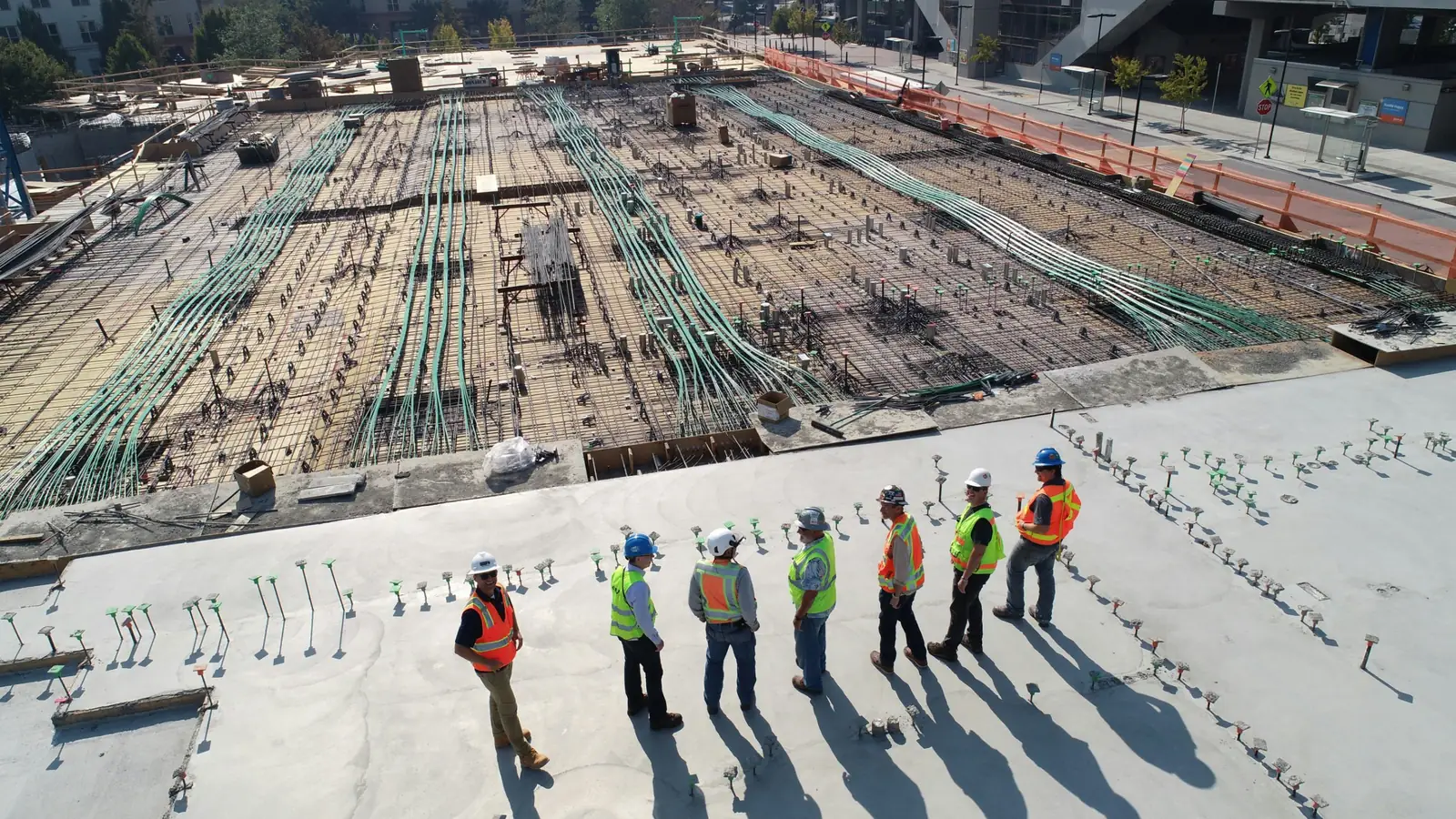
How do contractors actually get new construction clients?
Contractors get work through referrals, plan rooms and bid lists, pre-bid meetings, property and facility managers, developers, trade associations, job site signage, and a qualification statement that clears a general contractor's screening. Knowing how to get construction clients means building these channels before you need them, then answering each invitation to bid with a complete, traceable estimate.
How to Get Construction Clients: Start With the Nine Channels
Work arrives through a finite set of channels, and every signed contract can be traced to one of them. The nine we see produce repeatable volume are referrals, repeat clients, subcontractor and GC networks, bid lists, digital presence, direct outreach, trade associations, supplier and lender referrals, and public bid portals. Treat each as a job cost line: log the source on every proposal, then compare proposals sent against contracts signed per channel each quarter. A channel that generates ten invitations to bid and no awards is consuming estimating hours you could spend elsewhere.
For a general contractor, the mix shifts with project size. Public work runs through plan rooms and portals, private work runs through developers and property managers, and service work runs through referrals. Learning how to get construction clients with no experience means starting with the channels that require no track record: supplier relationships, small private owners, and subcontractor referrals into larger firms. Print the channel name on the proposal header so the source is captured before the job is won, not reconstructed from memory in December.
Track three numbers per channel: opportunities received, proposals submitted, and contracts signed. Add the estimated value of each opportunity so you can see whether a channel delivers volume or margin. Estimating hours are the hidden cost, and a channel that sends five bid-ready packages a month at $40,000 each can outearn one that sends a single $2 million invitation to bid you have a thin chance of winning.
Capacity gates every channel. Bonding capacity, license classifications, and crew availability decide which invitations you can accept, so a channel that sends work above your bonding limit is not a channel you can use yet. Review the mix quarterly with the same discipline you apply to a construction budget estimate, and drop the bottom channel each year.
| Channel | Best fit | What to track | Typical first move |
|---|---|---|---|
| Referrals | All trades and GCs | Referral source per signed contract | Ask at closeout, not at bid time |
| Repeat clients | Service and renovation work | Repeat revenue share | Call past clients before their fiscal year starts |
| Subcontractor and GC networks | Trade contractors | Invitations received per GC | Request inclusion on the bid list |
| Bid lists | GCs and large trades | Hit rate on invited bids | Send a qualification statement to each estimator |
| Digital presence | All, strongest for retail-facing work | Inbound inquiries per month | Publish project types, divisions, and service area |
| Direct outreach | GCs and developers | Meetings held per quarter | Send a one-page capability sheet with a scope match |
| Trade associations | Specialty trades | Leads from member directories | Join one association tied to your division |
| Supplier and lender referrals | New contractors | Referrals received per quarter | Ask the counter rep and loan officer directly |
| Public bid portals | Firms with bonding capacity | Bids submitted and awards | Register and set keyword alerts by division |
Why most contractor marketing fails
Most campaigns sell a capability instead of answering a question the buyer already has. An owner choosing a trade contractor wants to know who has done this scope, on what schedule, at what unit price, and with what insurance limits. A website that lists services without project types, CSI MasterFormat divisions handled, or service area gives that buyer nothing to compare.
The second failure is measurement. A contractor who cannot say which channel produced last year's work will keep funding the loudest one. Log the source on every proposal and every priced takeoff we deliver you issue, and the answer appears within two quarters.
The nine ways at a glance and who each suits
Match the channel to your license, bonding capacity, and crew size rather than to what competitors do. A residential remodeler and a Division 03 concrete subcontractor need different channels, and a firm with no public work history should not spend its first year chasing municipal portals. Ask which of the nine routes already sends you work, then decide how to get construction clients from the two channels with the shortest path to a signed contract.
Referrals, Repeat Clients, and the Network That Sends Work
Referrals cost almost nothing and close at a higher rate than cold outreach, because the buyer has already heard your name from someone with no reason to exaggerate. The people who send them are past clients, architects, engineers, property managers, facility managers, and the trade contractor who worked beside you on the last job. Construction networking and referrals work best when you ask a specific person for a specific project type, not when you ask generally for work. This is the plainest answer to how to get construction clients: earn the ask at closeout, then log it.
Build the ask into closeout. When you hand over as-built drawings and the punch list is signed off, ask the owner and the design professional one question: who else is planning work like this in the next twelve months? Record the answer the same day. A referral that is not logged becomes anecdote, and anecdote does not survive a slow quarter.
Suppliers and lenders see projects before they bid. The ready-mix dispatcher knows which developer is starting a foundation in six weeks, and the loan officer knows which owner just closed on financing. Those conversations take minutes and often produce a name and a phone number before any plan room posting appears.
| Source | Contact | Date asked | Outcome |
|---|---|---|---|
| Past client, retail tenant fit-out | Owner's facilities manager | 2026-03-04 | Two names, one meeting held |
| Architect, K-12 work | Project architect | 2026-03-19 | Added to bid list for 2027 project |
| Ready-mix supplier | Dispatch supervisor | 2026-04-02 | Developer name and phone number |
| Lender, commercial construction loan | Loan officer | 2026-04-11 | Introduction to owner's rep |
| Electrical subcontractor | Foreman on prior job | 2026-04-23 | Referral to prime contractor |
| Property manager, office portfolio | Regional manager | 2026-05-06 | Walkthrough scheduled |
Building a referral ask into every closeout
Closeout is the moment of highest trust: the work is accepted, the change orders are settled, and the owner is relieved. Ask then, and ask for a named project rather than a general introduction. Offer something in return, such as a one-page summary of the scope you handle and the divisions you cover, so the referral has something to forward.
Keep a single log with four columns: source, contact, date, and outcome. Review it monthly. If a source has produced three names and no meetings, the relationship needs a different conversation, not more asks.
Subcontractor, supplier, and lender referral loops
Prime contractors need reliable subs, and reliable subs need primes who pay on time. Trade that information deliberately: when a general contractor asks you for a Division 26 electrical sub, send a name and expect one back. Suppliers and lenders complete the loop because they see financing and material orders before the invitation to bid is issued.
How can you reach out in the market for more construction jobs without spending on advertising? Start with the people already on your job sites. A pre-bid meeting is a room full of contractors who all know which owners are building, and a certificate of insurance exchange at that meeting is a natural reason to start a conversation that outlasts the project. Ask each contact which scopes they expect to bid next, and note the answer against the source in your log.
How Can You Reach Out in the Market for More Construction Jobs?
Outreach works when it arrives during preconstruction, before the scope is fixed and before the budget is locked. That window sits between the owner's feasibility study and the issuance of drawings for bid, and it is the only time a contractor can influence the scope of work rather than just price it. Learning how to get construction clients starts with knowing who is in that window: developers with site plans filed, property managers with a capital budget cycle, and facility managers with an equipment replacement list.
Send a one-page capability sheet, not a brochure. It should name the CSI MasterFormat divisions you self-perform, your bonding capacity, license classifications, general liability and workers compensation limits, and two project types with square footage. That sheet answers the questions a general contractor asks before adding a name to a bid list, and it gives the recipient something to file.
How to get construction clients with no experience comes down to borrowed credibility. Offer a small scope at a competitive unit price, document it thoroughly, and use the closeout package as your portfolio. A referral from the client of that first job carries more weight than any advertisement, and the general conditions you learn to manage on a small job transfer directly to larger ones.
| Project stage | Who to contact | What to send | Timing |
|---|---|---|---|
| Site plan filed | Developer or owner's rep | Capability sheet with divisions and bonding capacity | Within two weeks of filing |
| Building permit applied | General contractor's estimator | Qualification statement and certificate of insurance | Before bid documents issue |
| Drawings issued for bid | Chief estimator | Bid list request with project type match | First week of the bid period |
| Pre-bid meeting scheduled | Estimating team | Attendance confirmation and scope questions | Two days before the meeting |
| Award announced | Awarded GC | Subcontractor availability letter | Within one week of award |
| Post-occupancy | Property or facility manager | Closeout summary and service scope | Thirty days after occupancy |
Direct outreach to owners and developers
Time the contact to the permit filing, when a project becomes public record but the trade contracts are still open. A short note referencing the project address and the divisions you handle gets read; a generic introduction does not. Follow with one call a week later and then a quarterly check-in until the project bids.
Keep the cadence to three touches per project: the note, the call, and a bid-time reminder. More than that reads as noise and gets your address filtered.
Getting on bid lists and public plan rooms
Public portals publish solicitations by division and by county, and registration is free in most cases. Set alerts for the divisions you self-perform, and read the bonding and insurance requirements before you download the package. A bid you cannot bond is an estimating hour wasted.
For private work, ask each general contractor's chief estimator to add you to the bid list and send a qualification statement with your certificate of insurance attached. Firms that prequalify subs keep that file current, and a complete file is what turns an invitation into a bid-ready package you can price with a priced bid takeoff rather than a guess.
How to Get More Construction Jobs With a Credible Digital Presence
Most buyers run a short online check before they call, and the check is narrow. They confirm your license number and expiration, pull your certificate of insurance for general liability and workers compensation limits, and look for at least one project that resembles theirs in size and building type. A site that answers those three questions in one screen does more for construction lead generation for contractors than a portfolio of stock photography.
Treat the site as a bid-ready document, not a brochure. Name the CSI MasterFormat divisions you self-perform (Division 03 concrete, Division 26 electrical), the project types you complete, and the states where you hold licenses. Owners comparing three trade contractors will pick the one whose scope of work reads like it was written by someone who has built the assembly. This is also the cheapest first answer to how to get construction clients: publish the evidence a GC would otherwise request by email.
| Check | What the buyer looks for | Where to post it |
|---|---|---|
| License | Number, classification, expiration date | Footer of every page and contact page |
| General liability | Carrier, per-occurrence and aggregate limits | Insurance section with certificate PDF |
| Workers compensation | Coverage status and state of issue | Same insurance section |
| Comparable project | Building type, size range, completion year | Project page with square footage |
| Cost discipline | Unit prices, takeoff rules, bid results | Estimating notes page or project page |
| References | Two or three recent clients, reachable | Project page, with permission |
What owners and GCs check before they call
A GC assembling a bid list verifies license status, insurance limits, and past performance on comparable work in about that order. Post the license number with its expiration date, the carrier and limits on your general liability policy, and your workers compensation coverage status. Add three references from projects finished in the last 24 months, with the contract value range rather than the exact figure. When a property manager or facility manager is the buyer, they also want to see that you have worked in occupied buildings and can sequence around tenants.
Project pages, photos, and proof of numbers
A photo of finished work proves you were there. A short project page with square footage, contract type, duration, and the divisions you performed proves you can plan. The stronger differentiator is published numbers: unit prices for common assemblies, the measurement rule behind a takeoff, and bid results you are willing to show. When a prospect can see that a 4,800-square-foot slab at a stated unit price reconciles to the quoted total, word of mouth about your numbers starts traveling without you in the room. If you want a model for presenting those figures, our walkthrough of the line-item estimating sheet shows how a bid is organized for a reader who intends to check the arithmetic.
Turn Estimates and Bids Into a Client Acquisition Asset
An estimate is the first document a client reads closely, and it shapes how they judge everything after it. A bid that lists quantities, units, and unit prices lets an owner follow the math from square footage or linear feet to the bottom line. That readability is how to market a construction business without advertising: the sheet itself demonstrates competence, and owners forward it to their partners.
When you sit on a bid list with four competitors, the differentiator is rarely the total. It is whether the owner understands what is included, what is excluded, and how a change order would be priced. Bidders who show the basis of each number get invited back to the next request for proposal even when they lose on price.
| Field | Example entry | Why it matters |
|---|---|---|
| Project type | Tenant improvement, 6,200 sf | Groups results by market |
| Bid date | 2026-08-14 | Tracks price movement over time |
| Competitors on list | Four invited, three bid | Shows list depth |
| Deciding division | Division 09 finishes | Points to the line to recheck |
| Our unit price vs winner | Within 4 percent | Tests pricing accuracy |
| Scope gap noted | Alternates not priced | Fixes the narrative, not the price |
| Follow-up action | Recheck takeoff quantity | Turns feedback into a task |
Showing owners where every number comes from
Build the estimate so each line carries a quantity, a unit, a unit price, and a source. Concrete priced by cubic yard, drywall by square foot, conduit by linear foot, and demolition by cubic yard all reconcile to a takeoff the owner can audit. Labor rates should trace to published wage data and material prices to a published index, with the date of the data shown. Our small contractor estimating work follows that format, and the bid estimating services page describes how a full bid package is assembled with marked-up drawings. For the mechanics of building the sheet, read how to estimate a construction bid, and if you are still forming the company, how to start a construction business covers the licensing and insurance groundwork a client will ask about.
Using bid feedback to sharpen the next pitch
After every award, ask the buyer one question: which line separated us from the winner. Most will share the category even when they will not share the number. Record the answer against the division and the project type, then adjust either the unit price or the scope narrative. If you lost because the owner read your exclusions as gaps, rewrite the exclusions as a priced alternate. If you lost on a single division, recheck the takeoff quantity before you assume the price was wrong.
Track Which Client Channels Pay Off
Most contractors can name where their last job came from but not which channel pays. A simple log of leads by source, sorted by signed contract value and gross margin, answers where contractors get new work in their own market rather than in a national average. Run it monthly and compare channels on margin, not on lead count.
Set the log up before you spend on marketing. One row per lead with source, date, project type, estimated value, outcome, and final contract value takes a few minutes a week and replaces guesswork with a record.
To start, request a free quote and attach your drawings.
| Channel | Leads | Proposals | Signed | Avg contract value | Cost per signed contract |
|---|---|---|---|---|---|
| Repeat clients | 6 | 5 | 4 | $85,000 | $150 |
| GC referrals | 9 | 6 | 2 | $140,000 | $900 |
| Plan room invitations | 22 | 8 | 1 | $60,000 | $2,400 |
| Trade association | 4 | 3 | 1 | $120,000 | $1,100 |
| Website inquiries | 7 | 4 | 1 | $45,000 | $700 |
Simple pipeline metrics for small contractors
Track four numbers per channel: leads received, proposals submitted, contracts signed, and average contract value. From those you get a proposal hit rate and a revenue per lead figure. A channel that sends ten leads and signs one $180,000 contract beats a channel that sends forty leads and signs two $30,000 jobs, even though the second looks busier. Add a column for the plan room or referral network the lead came through so you can tell a public invitation to bid from a private referral.
Cost per signed contract by channel
Divide what you spend on a channel by the contracts it produced. Spend includes dues, listing fees, event costs, and your own hours at a stated rate. A channel that costs $2,400 in a quarter and signs two contracts carries a cost of $1,200 per signed contract; compare that against the gross margin on those two jobs, not against the contract value. Keep the qualification statement, certificate of insurance, and bonding capacity current, because a lead that stalls on paperwork still counts as a cost. Track closeout too: a channel that brings jobs with long punch list disputes and slow closeout documents is more expensive than the fee suggests.
Frequently Asked Questions
How do I get construction clients with no reputation yet?
Start with channels that do not require a track record: subcontract work for an established general contractor, property and facility managers with small repair scopes, and trade associations where you meet people in person. Bring a one-page qualification statement listing license number, insurance limits, and three completed scopes with addresses. Every finished job becomes a reference you can name in the next proposal.
How can I reach out in the market for more construction jobs without cold calling?
Get onto bid lists and plan rooms so work comes to you as an invitation to bid. Register with public agencies, attend pre-bid meetings, and ask supply houses and trade associations to pass your name along. Send a short capability letter with your qualification statement to general contractors in your CSI MasterFormat divisions, then follow up after each bid.
What is the fastest way to get more construction jobs as a small contractor?
Call the clients you already served. Past clients and the general contractors who have used you convert faster than any new channel because scope, pricing, and payment terms are already known. Ask each one what else is on their list this quarter and offer a written scope for it. Referrals from that same group are the second-fastest source.
How much should a contractor spend on marketing to get new clients?
There is no single percentage that fits every trade. The budget depends on your trade, service radius, whether you bid public work, and how much of your pipeline is repeat business. Track cost per signed contract by channel for one quarter, then shift spend toward the channels that produced awarded work rather than the ones that produced the most inquiries.
Do online lead services work for construction companies?
They can, but only for narrow residential scopes where the homeowner is ready to buy. Shared leads are sold to several contractors, so you compete on call speed rather than price. For commercial and institutional work, bid lists, plan rooms, and direct relationships with general contractors produce better-qualified invitations than purchased leads.
How do I get on a general contractor's bid list?
Send a qualification statement with your license, certificate of insurance showing general liability and workers compensation limits, bonding capacity, and the CSI divisions you cover. Name the divisions precisely, such as Division 03 concrete or Division 26 electrical. Ask to be added for your scope, then respond to every invitation to bid so you stay on the list.
How does an estimate help with how to get construction clients?
A takeoff-backed estimate turns a conversation into a decision. When a developer or property manager sees unit prices, quantities in square footage or linear feet, and the measurement rule behind each line, they can compare your number to their budget without a second meeting. That clarity is what converts a first inquiry into an awarded scope.
Can you use my estimate template?
Send the template along with the plans and specifications, and we confirm whether the estimate can be delivered in it before the fee is quoted. If the template's line structure conflicts with the takeoff quantities, we flag it during plan review so the format and the scope match before work starts.